⏱ 18 min read
Most enterprise architecture maturity assessments are a waste of time.
That’s the blunt version. The longer version is this: too many organizations run a maturity assessment because they want the comfort of a score, not the pain of a diagnosis. They want a heatmap for the steering committee. They want a spider chart to paste into a slide deck. They want to say “we are level 3 moving toward level 4” as if architecture maturity is a video game badge.
It isn’t.
A real enterprise architecture maturity assessment should tell you whether architecture is actually changing business outcomes. Is it reducing integration chaos? Is it making cloud decisions faster and safer? Is it stopping every IAM project from becoming a political knife fight? Is it helping teams use Kafka properly instead of turning it into an expensive distributed queue with no ownership model? That’s the real test.
So let’s start simple.
What is an enterprise architecture maturity assessment?
An enterprise architecture maturity assessment is a structured way to evaluate how well architecture works across an organization. Not how many standards exist. Not how pretty the capability map is. How well architecture helps the enterprise make decisions, govern change, and deliver technology outcomes at scale.
In plain English: it tells you whether architecture is a useful operating function or just a corporate decoration.
A good assessment looks at things like:
- architecture governance
- strategy alignment
- business engagement
- delivery integration
- technology standards
- data and integration practices
- security and IAM alignment
- cloud operating model
- architecture skills and decision rights
- measurable outcomes
That’s the SEO-friendly definition. Now the more honest one.
Architecture maturity is really about one question: can the enterprise make good technology decisions repeatedly, under pressure, across teams, without reinventing itself every quarter?
That’s it.
If the answer is no, your maturity is lower than your documentation suggests.
The mistake people make right away
A maturity assessment is not an architecture audit. And it’s definitely not a repository review.
I’ve seen organizations with immaculate architecture artifacts score themselves highly because they had:
- a formal review board
- reference architectures
- a standards catalog
- a target-state diagram for everything
- some expensive modeling tool nobody likes
Then you go talk to delivery teams and hear the real story:
- architecture reviews take three weeks
- standards are ignored because they’re too generic
- cloud patterns don’t match the landing zone
- IAM is handled differently in every program
- Kafka topics are created without domain ownership
- the “approved integration strategy” is bypassed in emergencies, which means weekly
That is not maturity. That is architecture theater.
Real maturity shows up in operating behavior, not in documentation density.
A practical model for assessing EA maturity
You can use many maturity models. TOGAF-inspired models, government frameworks, internal scorecards, consulting templates. Fine. Use whatever gives you structure. But if you want something useful in real architecture work, assess maturity across six practical dimensions.
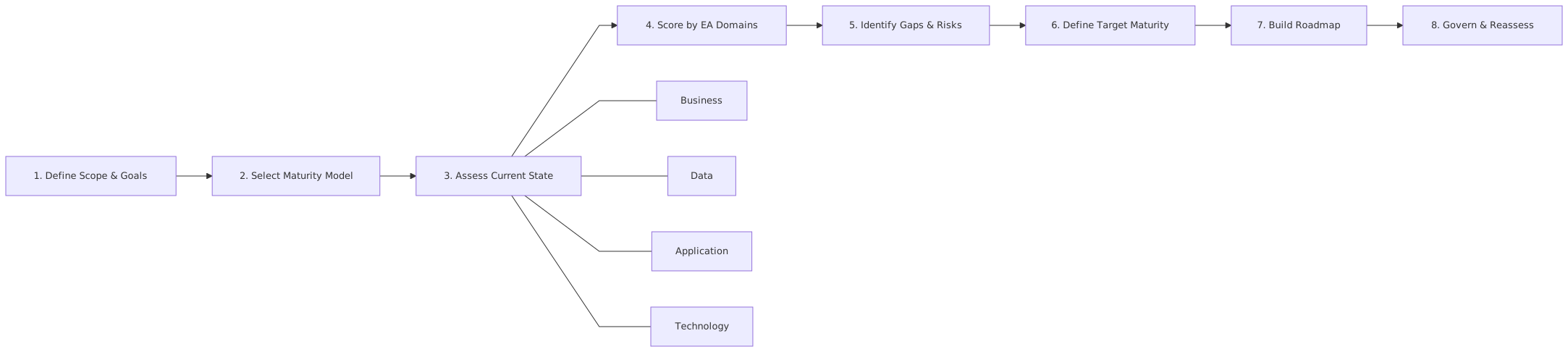
Here’s the model I recommend.
Enterprise Architecture Maturity Dimensions
This model works because it reflects how architecture actually succeeds or fails in the enterprise.
Notably absent: “repository completeness.” On purpose.
The maturity levels, without the usual nonsense
Most maturity models use five levels. That’s fine. But I’d describe them like this.
Level 1: Accidental architecture
There may be architects, but architecture is mostly reactive. Decisions happen project by project. Standards are weak or ignored. Business leaders don’t really know why architecture exists.
Common signs:
- architecture is engaged too late
- cloud decisions are driven by whichever team shouts loudest
- IAM is fragmented across business units
- Kafka or API platforms are used inconsistently
- roadmaps are local, not enterprise-wide
This is very common. More common than people admit. ArchiMate in TOGAF ADM
Level 2: Controlled chaos
Architecture is recognized as a function. Some governance exists. Some standards exist. There are review meetings and target-state diagrams. But execution is inconsistent, and architecture still depends heavily on specific individuals. ArchiMate for governance
Common signs:
- architecture board exists, but exceptions are frequent
- domain ownership is unclear
- integration patterns differ by program
- cloud platform standards exist, but landing zones vary
- architecture artifacts are better than architecture outcomes
A lot of big organizations live here for years.
Level 3: Operational architecture
Architecture is embedded in planning and delivery. Governance is more practical. Standards are reusable and enforced through engineering and platform mechanisms, not just documents. Architects influence funding and delivery priorities. EA governance checklist
Common signs:
- architecture decisions are traceable
- product and engineering teams know when to engage architects
- IAM, cloud, and integration patterns are standardized enough to scale
- architecture metrics exist and are somewhat trusted
- exceptions are managed, not normalized
This is where architecture starts becoming useful.
Level 4: Strategic architecture
Architecture actively shapes enterprise change. It influences operating model shifts, platform strategy, risk posture, and transformation sequencing. The function is trusted by both business and technology leadership.
Common signs:
- architecture is involved in portfolio design, not just solution review
- platform strategy reduces delivery friction
- enterprise standards are pragmatic and continuously updated
- architecture supports M&A, regulatory change, modernization, and cost optimization coherently
- business leaders ask for architecture input before major decisions
This is strong maturity. Rare, but real.
Level 5: Adaptive architecture
I’m slightly skeptical of level 5 language because it often turns into management poetry. But in practical terms, this means architecture is deeply embedded in enterprise sensing and adaptation. Decision-making is fast, decentralized where possible, centralized where necessary, and supported by strong platforms and guardrails.
Common signs:
- architecture governance is mostly built into engineering workflows
- cloud, IAM, eventing, and data patterns are productized
- architecture debt is visible and managed like financial debt
- strategic shifts can be absorbed without chaos
- business and technology planning are genuinely connected
Very few enterprises are fully here. And that’s okay.
My contrarian view: you do not need level 5 everywhere. In fact, chasing “optimized maturity” across all architecture domains is usually a bad investment. A retail bank may need level 4 maturity in IAM, security architecture, resilience, and integration governance, but only level 2 or 3 in some back-office capability modeling areas. Maturity should follow risk and value, not ideology.
How to run the assessment without turning it into bureaucracy
Here’s the practical way to do it.
1. Assess behavior, not artifacts
Yes, review artifacts. But don’t stop there. Interview people across the chain:
- CIO or CTO direct reports
- business product leaders
- security leaders
- platform owners
- solution architects
- engineering managers
- delivery leads
- operations and risk stakeholders
Ask them what actually happens when a major decision is needed.
For example:
- How is a new cloud service approved?
- Who decides IAM patterns for customer-facing apps?
- When do architects get involved in Kafka topic design?
- How are integration exceptions handled?
- What happens when a product team rejects the standard pattern?
If answers vary wildly, maturity is lower than reported.
2. Use evidence from live initiatives
Don’t assess in the abstract. Pick 5–10 active or recently completed initiatives and examine them.
Look at:
- decision logs
- architecture review outcomes
- exception records
- platform adoption
- delivery delays caused by architecture issues
- incidents tied to poor architecture decisions
- duplication of patterns
This is where the truth lives.
3. Separate enterprise maturity from individual heroics
A common trap: one or two excellent architects are holding the place together, so leadership assumes the architecture function is mature.
No. That means the architecture function is fragile.
If the quality of decisions collapses when two senior architects go on leave, you don’t have maturity. You have dependency risk.
4. Score honestly, then write the narrative
Scores are useful only if they summarize a real narrative. Every dimension should include:
- current-state assessment
- evidence
- business impact
- root causes
- practical next steps
If all you produce is a radar chart, you’ve done half a job at best.
What this looks like in real architecture work
This is the part many articles skip. So let’s make it concrete.
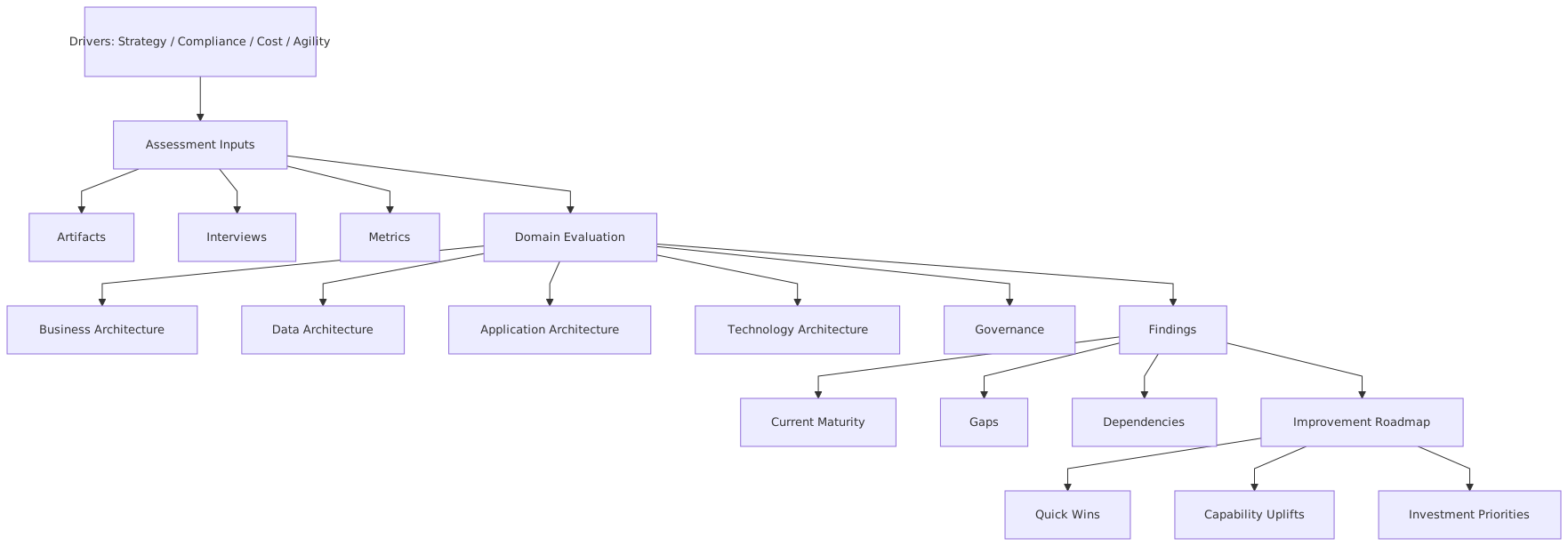
An enterprise architecture maturity assessment matters because architecture problems are rarely isolated. They show up as recurring delivery friction.
In cloud architecture
A low-maturity organization often says it has a cloud strategy. What it really has is:
- multiple landing zones built by different teams
- inconsistent tagging and policy enforcement
- identity integrated differently in each business unit
- unclear decision rights for PaaS adoption
- no shared view of platform boundaries
Architects then spend their lives mediating exceptions.
A mature environment looks different. Cloud decisions are made through a combination of platform standards, reusable patterns, and lightweight governance. Architects are not manually reviewing every storage account or Kubernetes cluster. They’re shaping the guardrails, exception logic, and roadmap. architecture decision record template
That’s maturity: less meeting, more leverage.
In IAM
IAM is where architecture immaturity becomes painfully visible.
In low-maturity enterprises:
- workforce and customer IAM are mixed conceptually
- authorization models are inconsistent
- applications manage roles locally
- identity proofing is solved repeatedly
- federation is added late
- architects focus on tools rather than trust boundaries
This creates security risk, delivery delay, audit pain, and ugly integration debt.
In higher-maturity enterprises:
- identity domains are clearly separated
- authentication and authorization patterns are standardized
- privileged access is governed coherently
- business ownership of access decisions is explicit
- IAM architecture is integrated with application, data, and cloud patterns
That’s not glamorous. But it saves enormous pain.
In Kafka and event-driven architecture
Kafka is a fantastic platform. It is also one of the easiest ways to industrialize bad architecture decisions.
Low-maturity behavior looks like this:
- teams create topics without domain ownership
- event schemas drift
- retention policies are inconsistent
- Kafka is used as a request-response workaround
- nobody agrees who owns event contracts
- replay and recovery are afterthoughts
Then six months later, the enterprise says “Kafka is complex.” No, your architecture discipline is weak.
Higher maturity looks like:
- event ownership is tied to business domains
- schema governance is practical and automated
- platform teams provide opinionated patterns
- architects define where eventing is appropriate and where it isn’t
- integration strategy includes APIs, batch, and events with clear trade-offs
That’s the difference between having a platform and having a mess.
A real enterprise example: retail banking modernization
Let’s take a realistic example.
A mid-sized retail bank is modernizing customer onboarding, payments servicing, and fraud monitoring. It has legacy core systems, a growing cloud footprint, a central IAM team, and a strategic push toward event-driven integration using Kafka.
Leadership believes architecture maturity is “pretty good” because:
- there is an EA team
- all projects go through architecture review
- cloud standards exist
- Kafka is available as an enterprise service
- IAM is owned by a central security function
Sounds decent. But the maturity assessment tells a different story.
What the assessment found
1. Governance was present but ineffective
Architecture reviews happened, but too late. Most reviews occurred after major delivery decisions had already been made. Architects were approving or rejecting implementation details rather than shaping direction early.
Result:
- repeated rework
- frustrated delivery teams
- architecture seen as a blocker
2. IAM was centralized but not architecturally integrated
The security team owned IAM tooling, but customer identity, workforce identity, and partner federation patterns were not consistently separated. Several digital channels had custom authorization logic. Fraud systems consumed identity data differently from onboarding platforms.
Result:
- duplicated controls
- audit findings
- inconsistent customer experience
3. Kafka adoption outran architecture discipline
Teams were encouraged to publish events, but event ownership was unclear. Some onboarding events contained customer data that downstream teams interpreted differently. There was no common pattern for schema evolution or business event definitions.
Result:
- brittle integrations
- duplicate topic creation
- operational support burden
4. Cloud standards existed, but platform maturity lagged
The bank had a preferred cloud provider and basic landing zone standards, but teams still built application environments differently. Logging, secrets management, and network patterns varied between programs.
Result:
- inconsistent security posture
- slower production readiness
- high operational variance
5. Enterprise architecture was weakly connected to portfolio planning
Architects were engaged once a funded project existed. They had little influence over sequencing, dependency planning, or platform investment cases.
Result:
- recurring delivery bottlenecks
- underfunded shared capabilities
- local optimization across programs
The maturity rating
Using the six dimensions above, the bank landed roughly here:
Overall, the bank was not immature in the simplistic sense. It had capable people and some strong foundations. But in operating terms, it was still around level 2 moving toward 3.
That distinction matters. Because the right action is not “create more standards.” The right action is to improve how architecture works in delivery and portfolio decisions.
What the bank did next
The improvement plan was practical, not ceremonial:
- Moved architecture engagement earlier
Architects joined investment shaping before project approval.
- Split IAM architecture into clear domains
Workforce IAM, customer IAM, and privileged access patterns were separately governed but aligned.
- Created a real event governance model for Kafka
Domain ownership, schema rules, retention standards, and event review checkpoints were introduced.
- Strengthened cloud platform architecture
Logging, secrets, network controls, and deployment patterns became platform products, not slideware.
- Reduced architecture review scope
Low-risk standard solutions moved to self-service patterns. Review effort focused on exceptions and high-impact decisions.
That is what maturity improvement should look like: fewer abstract aspirations, more operational changes.
Common mistakes architects make in maturity assessments
Architects are not innocent here. We create some of this mess ourselves.
1. Confusing control with maturity
Many architects think tighter governance means higher maturity. It often means the opposite.
If every decision needs central review, your architecture is not mature. It is brittle. Mature architecture pushes routine decisions into platforms, patterns, and team guardrails.
2. Scoring based on what exists, not what works
“We have a reference architecture.” Great. Is it used?
“We have an integration standard.” Fine. Does it reduce inconsistency?
“We have an architecture board.” Okay. Does it improve decision speed and quality?
Presence is not performance.
3. Ignoring the operating model
You cannot assess architecture maturity without understanding how the enterprise is organized. A federated bank, a centralized insurer, and a digital-native platform company should not be assessed the same way.
Architecture maturity is partly about matching architecture practices to the enterprise operating model. Many assessments miss that entirely.
4. Overvaluing enterprise-wide consistency
Here’s a contrarian thought: some inconsistency is healthy.
Not every domain needs the same depth of governance, same documentation, same target-state precision, or same review path. Trying to standardize everything is how architecture becomes slow and resented.
The point is coherent variance, not uniformity.
5. Treating maturity as linear progress
Organizations do not mature neatly from 1 to 5. They mature unevenly.
You might have:
- strong cloud platform maturity
- weak business architecture
- decent security governance
- poor data ownership
- excellent solution architecture in one business unit and weak practice in another
That’s normal. Assess that reality instead of forcing a tidy story.
6. Making the assessment too abstract
If your report doesn’t mention real delivery pain, it won’t matter.
Tie every maturity gap to something concrete:
- delayed releases
- duplicate systems
- audit findings
- higher cloud costs
- poor IAM controls
- Kafka support incidents
- integration rework
- customer impact
That’s what gets attention.
How to improve maturity without launching a three-year architecture transformation
This is where strong opinions matter: do not respond to a maturity gap by creating a giant architecture program.
That usually becomes self-referential and dies under its own process.
Instead, improve maturity through targeted operating changes.
Focus on decision points
Find the recurring decisions that create friction:
- cloud service adoption
- IAM pattern selection
- API vs Kafka event design
- data ownership assignments
- exception approvals
- platform boundary decisions
Then improve those mechanisms.
Productize standards
A standard that lives in Confluence is weak. A standard built into Terraform modules, CI/CD templates, Kafka topic provisioning controls, IAM integration patterns, and cloud policies is strong.
This is one of the biggest maturity shifts an enterprise can make.
Clarify decision rights
A painful amount of architecture dysfunction comes from ambiguity over who decides what.
Be explicit:
- what enterprise architects decide
- what domain architects decide
- what platform teams decide
- what product teams can decide within guardrails
- who can approve exceptions
Without this, maturity stalls.
Measure architecture outcomes
Use a small set of real metrics:
- architecture decision turnaround time
- exception volume and cause
- standard adoption rate
- duplicate technology patterns
- rework caused by late architecture issues
- platform reuse
- incidents linked to architectural weaknesses
Not fifty metrics. Six or seven good ones.
Build maturity where risk and leverage are highest
In a bank, I would prioritize:
- IAM and security architecture
- cloud platform governance
- integration and event architecture
- resilience and operational architecture
- data ownership and control patterns
I would not start by perfecting capability maps unless they are directly tied to investment planning.
That’s another slightly unpopular view. Some EA teams spend too much time polishing enterprise maps while delivery suffers from basic design inconsistency.
A lightweight assessment approach you can actually use
If you need a practical cadence, do this:
Quarterly pulse review
A quick assessment across key dimensions using live initiatives and stakeholder interviews. This is not a full reassessment, more a health check.
Annual deep assessment
A broader review with evidence, scoring, trend analysis, and improvement plan.
Trigger-based reviews
Run targeted maturity assessments after:
- major cloud migration waves
- M&A activity
- regulatory findings
- platform modernization
- operating model changes
- repeated delivery failures in a domain
Architecture maturity is not static. It changes as the enterprise changes.
What good looks like, really
Let me put this simply.
A mature architecture function is not the one with the most documents. It is the one that makes the enterprise easier to change.
That means:
- strategy is translated into technology choices
- standards are opinionated and usable
- governance is fast enough to matter
- IAM is not reinvented by every program
- Kafka is governed as a business integration capability, not just a cluster
- cloud controls are automated where possible
- architects are engaged early and trusted
- exceptions are visible and intentional
- architecture debt is recognized and managed
If your architecture function cannot do those things, your maturity is lower than you think.
And that’s okay, by the way. Low or uneven maturity is not a moral failure. It’s just a condition. The mistake is pretending otherwise.
A maturity assessment should create clarity, not comfort.
That’s the real point.
FAQ
1. How often should an enterprise architecture maturity assessment be done?
Usually once a year for a full assessment, with lighter quarterly reviews. If the organization is going through major cloud migration, merger activity, or regulatory pressure, assess more often in those affected domains.
2. Who should own the maturity assessment?
Ideally the head of enterprise architecture sponsors it, but it should include input from business, security, platform, engineering, and delivery leaders. If architects assess themselves in isolation, the result will be biased and less useful.
3. What is the biggest sign of low architecture maturity?
Inconsistent decision-making across teams. You’ll see repeated debates on IAM, cloud, integration, and platform choices because the enterprise has no reliable mechanism for making and enforcing good decisions.
4. Can an organization be mature in cloud architecture but immature in enterprise architecture overall?
Yes, absolutely. Maturity is uneven. An enterprise may have a strong cloud platform and still struggle with portfolio alignment, business engagement, data ownership, or event governance. Don’t flatten the picture into one score.
5. What should we improve first after the assessment?
Start where architectural weakness causes the most operational pain or risk. In many enterprises, that means governance timing, IAM consistency, cloud guardrails, and integration patterns like APIs and Kafka. Fixing those usually creates faster visible value than launching a broad architecture “uplift” program.
Frequently Asked Questions
What is enterprise architecture?
Enterprise architecture is a discipline that aligns an organisation's strategy, business processes, information systems, and technology. Using frameworks like TOGAF and modeling languages like ArchiMate, it provides a structured view of how the enterprise operates and how it needs to change.
How does ArchiMate support enterprise architecture practice?
ArchiMate provides a standard modeling language that connects strategy, business operations, applications, data, and technology in one coherent model. It enables traceability from strategic goals through business capabilities and application services to the technology platforms that support them.
What tools are used for enterprise architecture modeling?
The main tools are Sparx Enterprise Architect (ArchiMate, UML, BPMN, SysML), Archi (free, ArchiMate-only), and BiZZdesign Enterprise Studio. Sparx EA is the most feature-rich option, supporting concurrent repositories, automation, scripting, and integration with delivery tools like Jira and Azure DevOps.