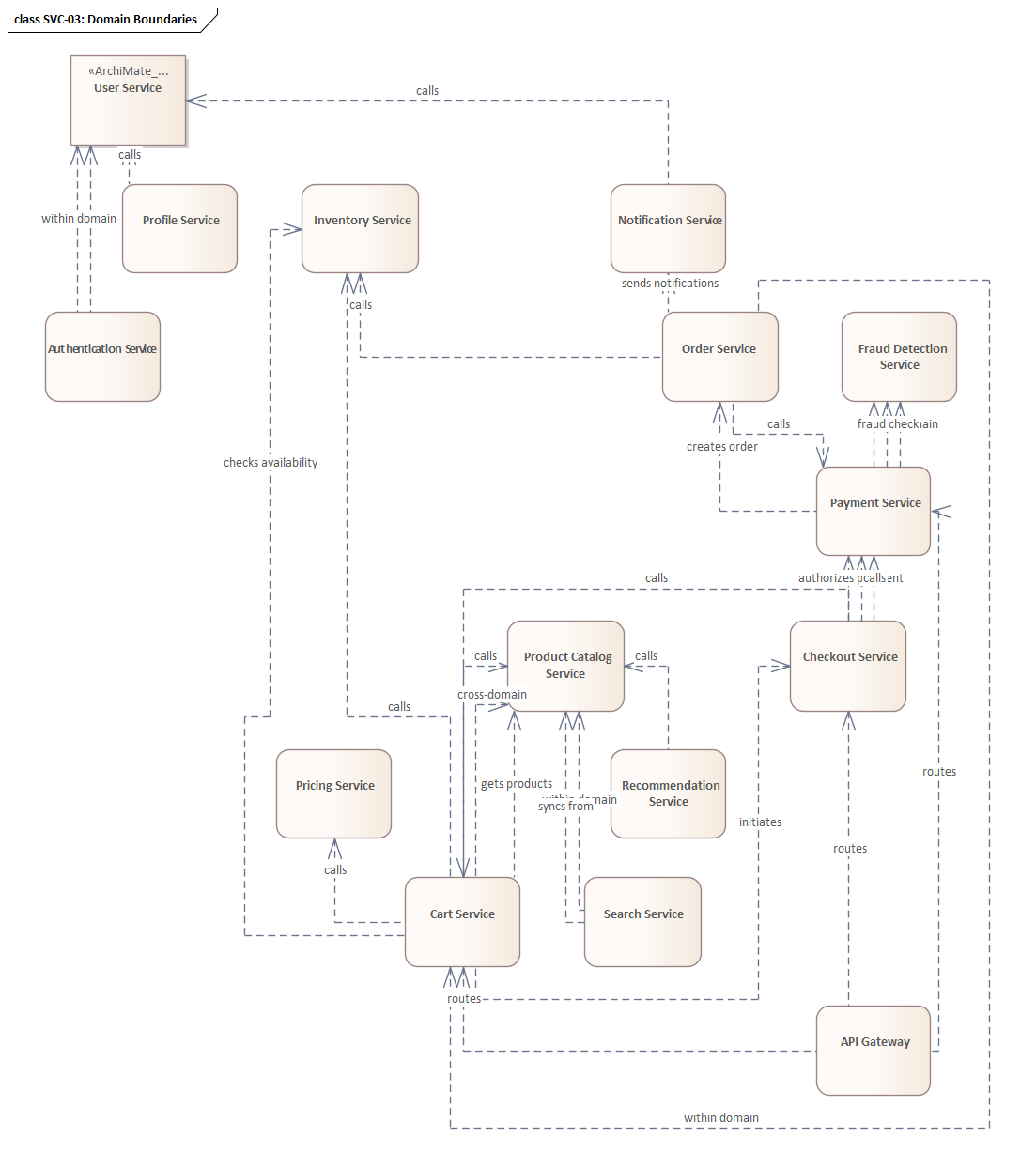
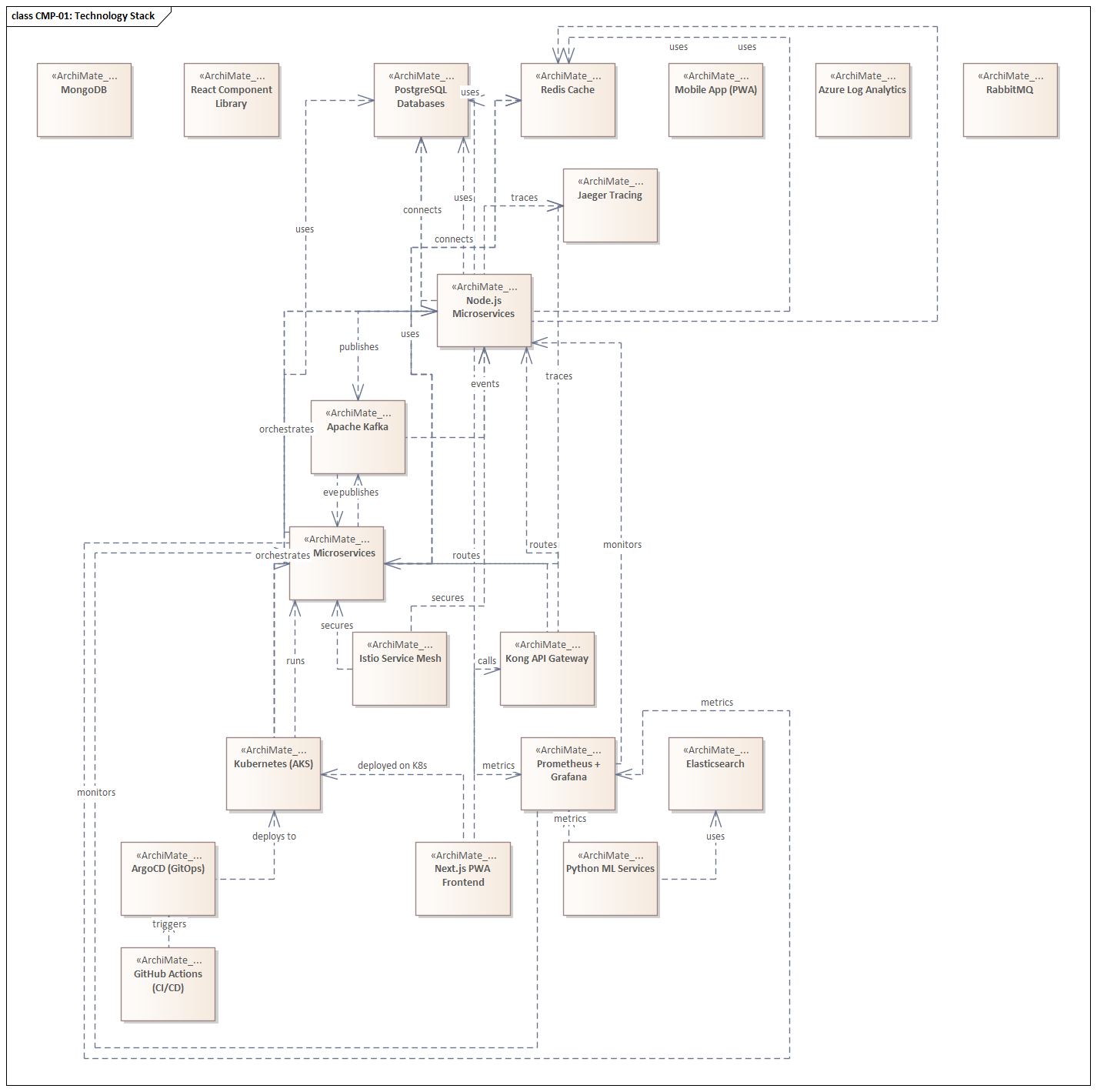
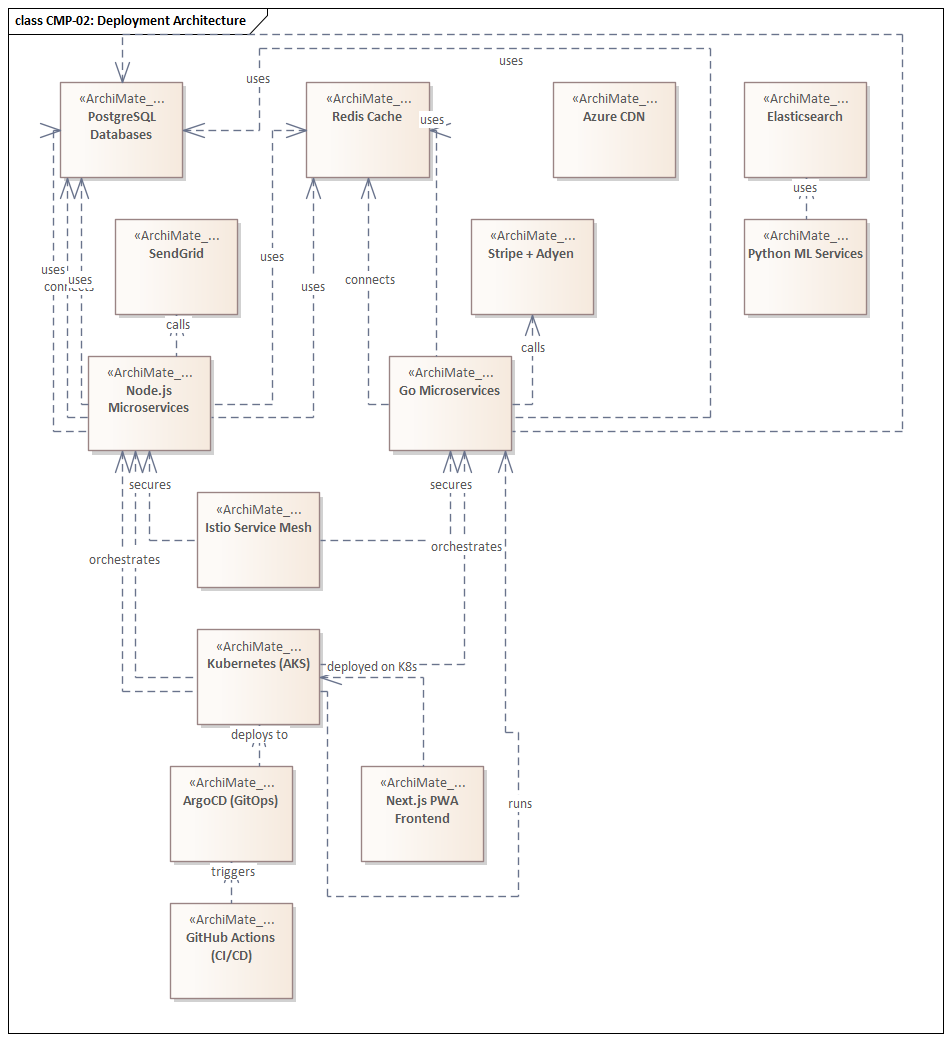
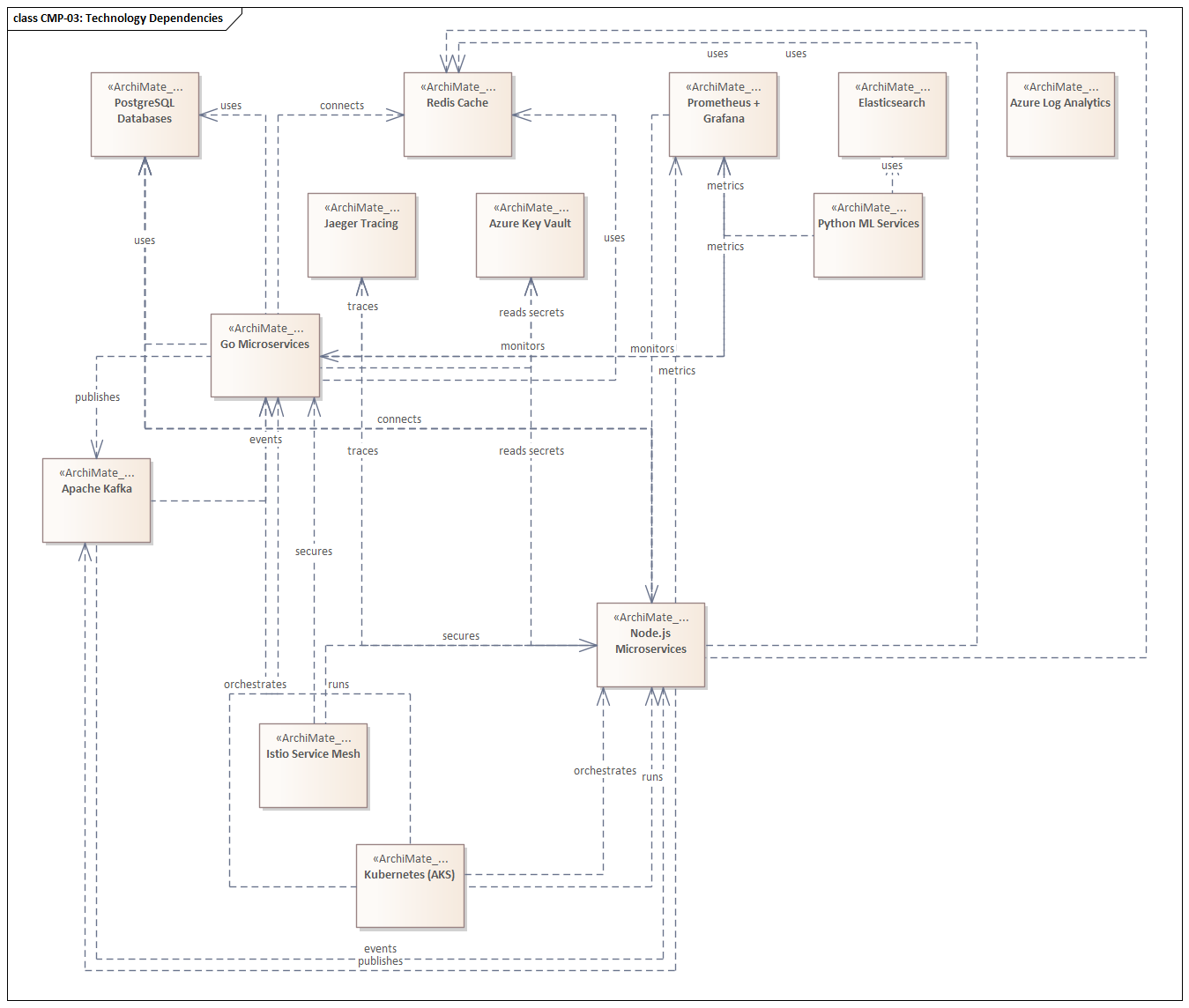
This guide presents a complete enterprise architecture blueprint for a modern eCommerce platform, modeled in Sparx Enterprise Architect using the ArchiMate modeling language. It covers every layer of the architecture — from executive strategy and governance down to microservices, databases, and cloud infrastructure — with 55 real diagrams exported from Sparx EA.
E-commerce architecture layers
Whether you are an enterprise architect planning a digital commerce platform, a solution architect evaluating microservices patterns, or a TOGAF practitioner looking for a concrete ADM example, this reference demonstrates how Sparx EA can serve as the single source of truth for architecture documentation across all layers. ArchiMate in TOGAF ADM
What This Architecture Covers
The ECommerce Architecture Blueprint spans eight chapters, each corresponding to a major architecture domain:
Governance & Decisions — Architecture principles, decision records (ADRs), standards, and compliance
Strategy & Motivation — Business drivers, strategic goals, scope and phase planning
Requirements — 30 functional requirements, 15 non-functional requirements, and constraints
Business Architecture — Capability maps, business processes, roles, and RACI matrices
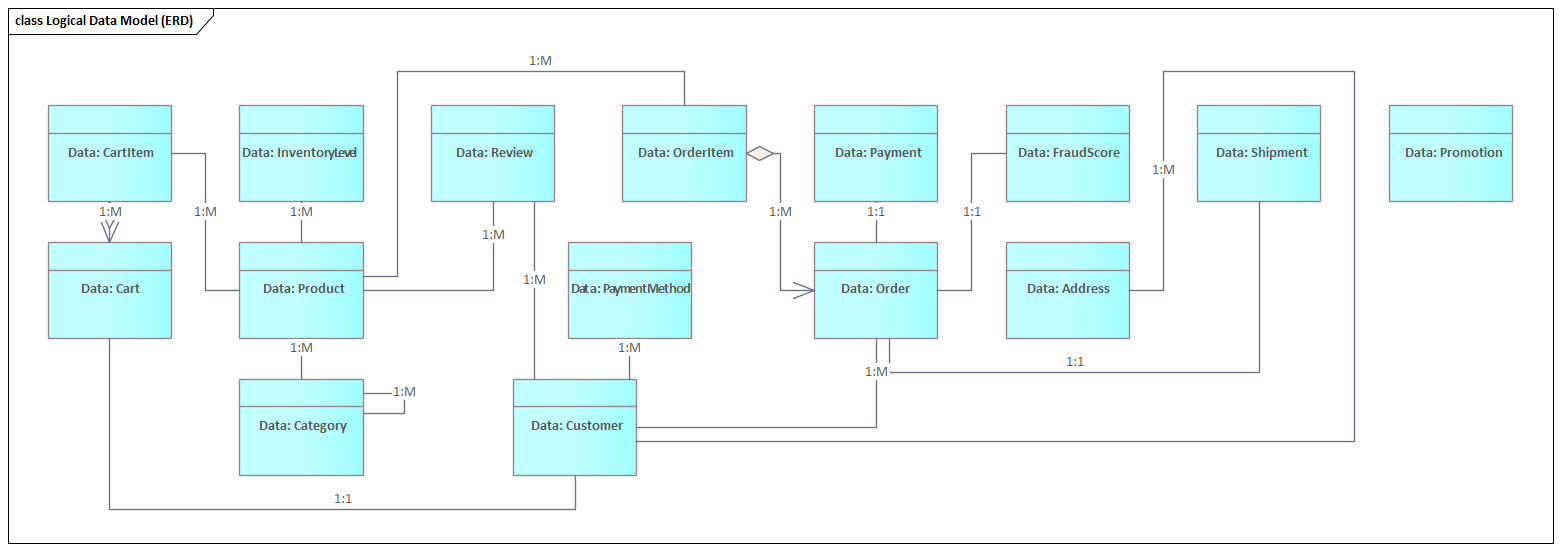
Application Architecture — 25 microservices, service landscape, technology stack, and data model
Technology Architecture — Infrastructure nodes, network topology, and cloud deployment
Traceability Patterns — Complete value chain from drivers to running infrastructure
View Library — Curated views for executives, architects, and operations teams
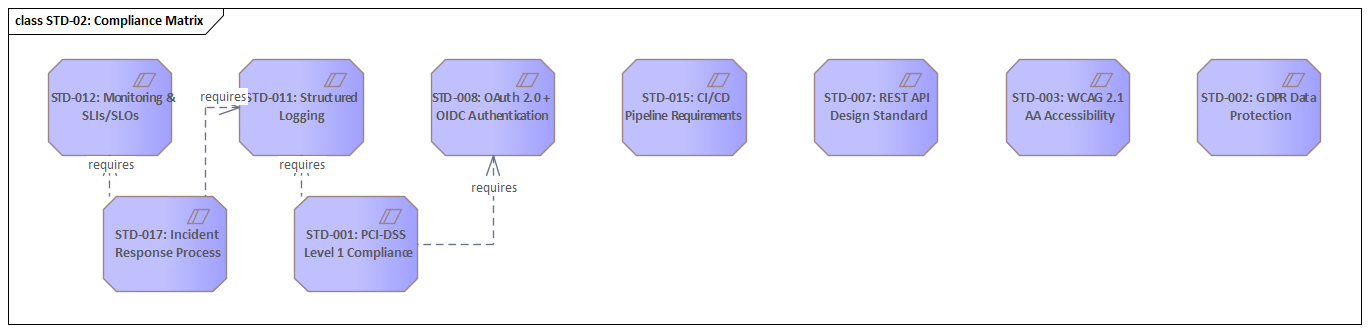
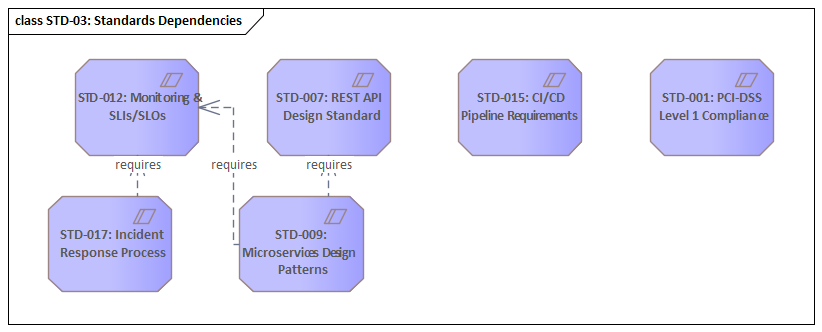
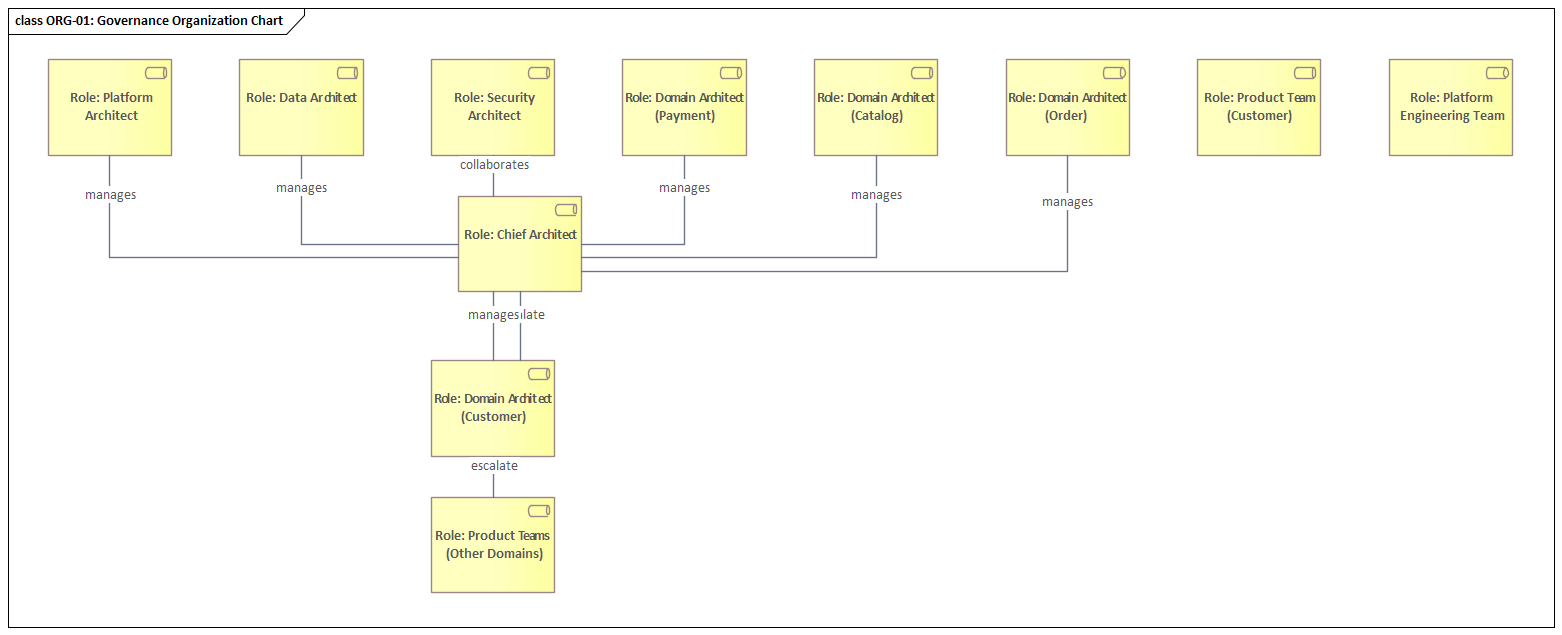
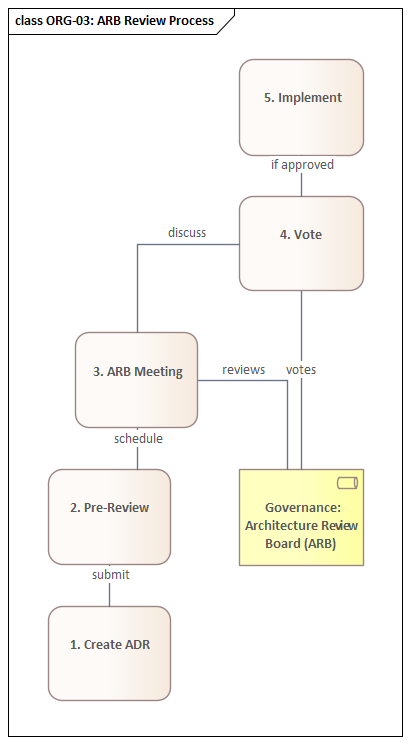
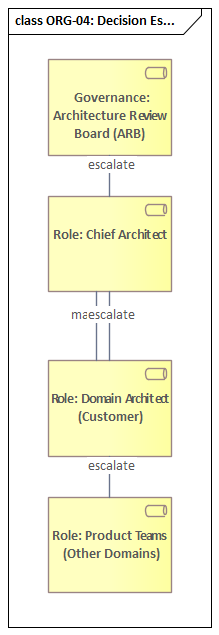
The architecture's rules of the road: the ten principles every design decision must honour, the fifteen ADRs that capture major choices, the standards framework, and the governance organisation.
1.1 Architecture Principles
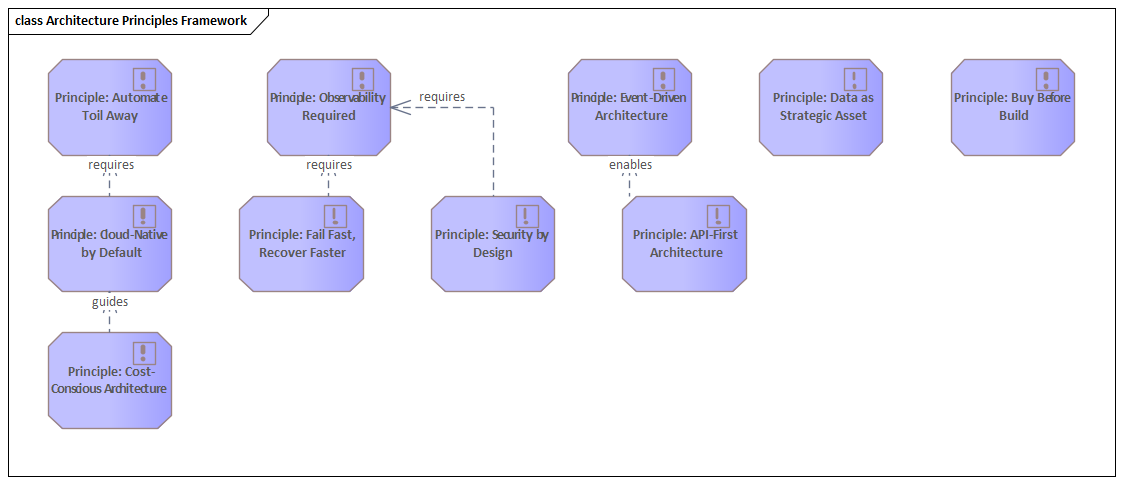
Ten architecture principles define the non-negotiable qualities this platform must exhibit. They are not aspirational — they are binding constraints that any design decision must satisfy. The diagram below shows how these principles depend on and reinforce each other.
Architecture Principles Framework
Automate Toil Away
All repetitive operational work must be automated. Manual steps in build, deploy, test, and monitoring pipelines are technical debt to be eliminated.
Observability Required
Every service must emit structured logs, metrics, and distributed traces. Observability is a first-class deliverable, not a post-launch addition.
Cloud-Native by Default
Workloads run on Kubernetes (AKS). Infrastructure is managed as code with Terraform. Stateless services and managed data stores are preferred.
Fail Fast, Recover Faster
Circuit breakers, retries with back-off, and automated rollback ensure failures are detected quickly and their blast radius minimised.
Security by Design
Zero-trust networking (Istio), secrets in Azure Key Vault, and threat modelling integrated into the SDLC. Security is never bolted on.
Event-Driven Architecture
Services communicate asynchronously via Apache Kafka wherever possible. Tight synchronous coupling is a red flag in design reviews.
API-First Architecture
All capabilities are exposed through versioned, documented APIs before UI is built. The API contract is the product.
Data as Strategic Asset
Data quality, lineage, and governance are owned by named teams. No service owns data it does not produce.
Cost-Conscious Architecture
Every infrastructure decision includes a cost model. Auto-scaling policies are tuned to match actual load patterns.
Buy Before Build
Commodity capabilities (payments, email, maps) are sourced from mature SaaS products unless a compelling competitive differentiator exists.
1.2 Architecture Decision Records
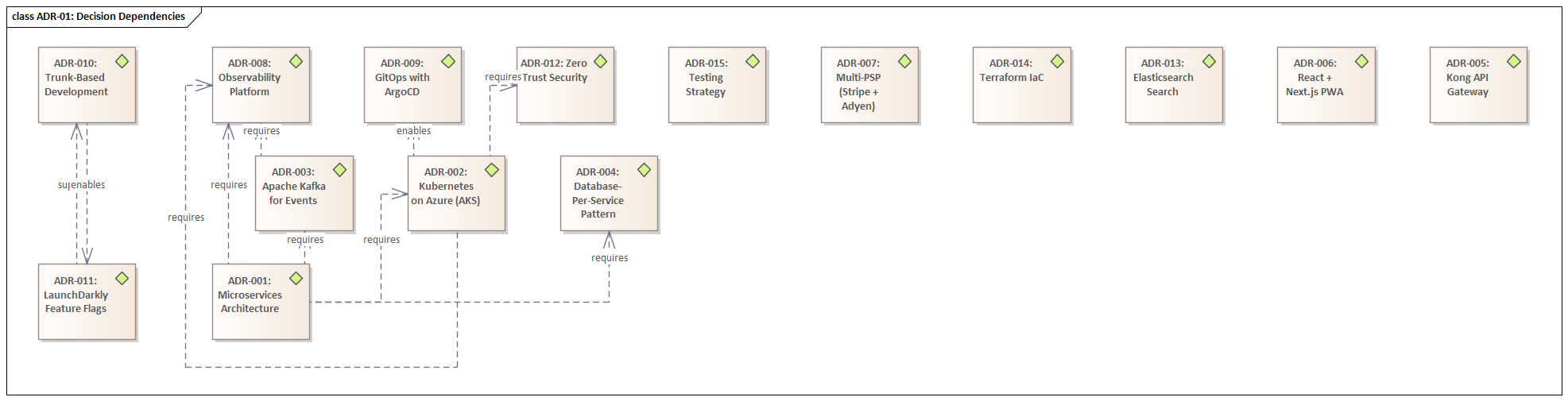
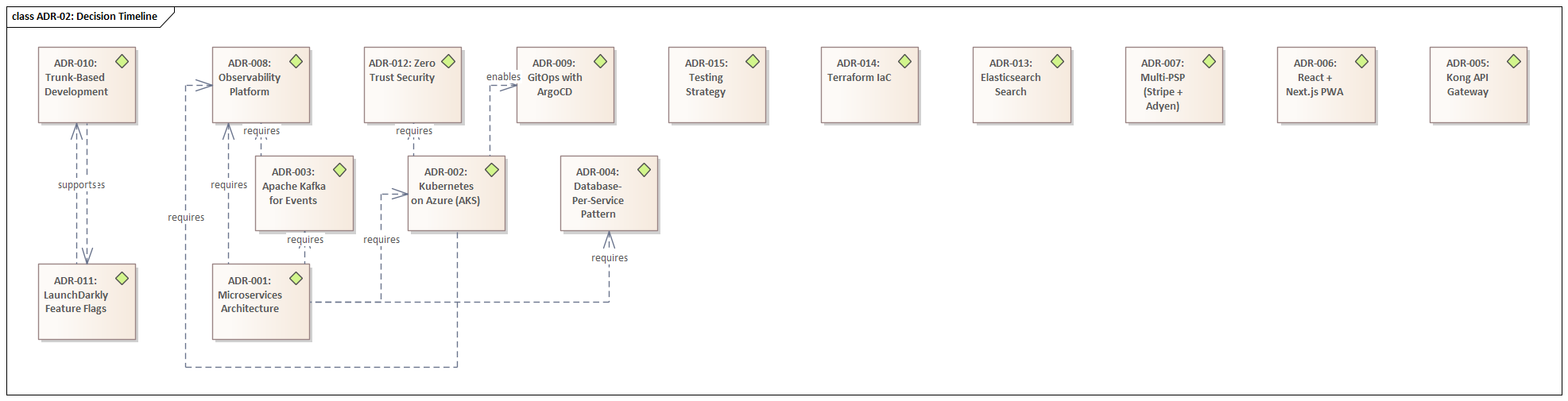
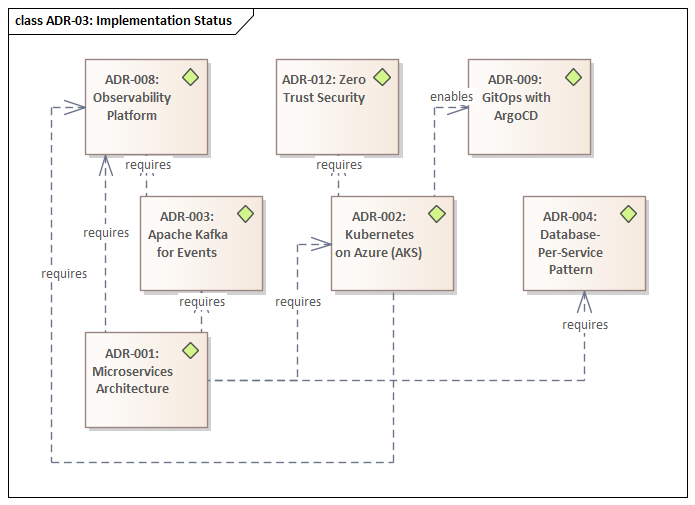
Architecture Decision Records (ADRs) document the major technical choices made during the project, the context in which they were made, and the trade-offs accepted. The fifteen ADRs below form a dependency chain: the foundational decision to adopt a Microservices Architecture (ADR-001) cascades into decisions about event streaming, deployment, security, and delivery.
ADR-02Decision Timeline & Dependency Chain
ADR-001
Microservices Architecture
The foundational decision. The platform is decomposed into independently deployable services, each owning its domain and data store. Enables independent scaling and team autonomy.
ADR-002 — Kubernetes on Azure (AKS) Managed Kubernetes chosen as the orchestration layer. Azure Kubernetes Service provides the control plane, reducing operational overhead while retaining full container scheduling flexibility.
ADR-003 — Apache Kafka for Events Kafka is the event bus for all asynchronous inter-service communication. Supports replay, fan-out, and time-decoupled consumption patterns critical for order and inventory flows.
ADR-004 — Database-Per-Service Pattern Each microservice owns its own PostgreSQL schema or MongoDB collection. Shared databases are prohibited. Maintains loose coupling and allows independent schema evolution.
ADR-005 — Kong
API Gateway
Kong provides the single ingress point for all external API traffic. Authentication, rate limiting, request transformation, and routing policies are centralised here.
ADR-006 — React + Next.js PWA The storefront is a Progressive Web App built with Next.js (server-side rendering for SEO) and React. Targets near-native mobile performance with a single codebase.
ADR-007 — Multi-PSP (Stripe + Adyen) Two payment service providers provide redundancy and international coverage. Failover logic routes payments automatically when one PSP is degraded.
ADR-008 — Observability Platform Prometheus + Grafana for metrics, Jaeger for distributed tracing, and Azure Log Analytics for log aggregation. Every service emits all three telemetry types.
ADR-009 — GitOps with ArgoCD Deployment state is declared in Git. ArgoCD reconciles the cluster state to match. No direct kubectl apply in production — all changes go through pull request.
ADR-010 — Trunk-Based Development All engineers commit to a single main branch with short-lived feature branches (≤2 days). Enables the 5× daily deployment cadence targeted in strategy.
ADR-011 — LaunchDarkly
Feature Flags
Feature flags decouple deployment from release. Dark launches, canary rollouts, and A/B tests are managed without code deploys.
ADR-012 — Zero Trust Security Istio service mesh enforces mTLS between all services. No implicit trust based on network position. Identity-based access control applies inside the cluster.
ADR-013 — Elasticsearch Search Product search and discovery are powered by Elasticsearch, supporting full-text search, faceted filtering, and relevance tuning independent of the product database.
ADR-014 — Terraform IaC All Azure resources are defined in Terraform modules. Infrastructure changes go through CI/CD with plan review before apply. Drift detection is automated.
ADR-015
Testing Strategy
70% unit tests, 20% integration tests, 10% end-to-end tests. Contract tests (Pact) cover service boundaries. Performance tests run nightly in a staging environment.
Chapter II: Strategy & Motivation
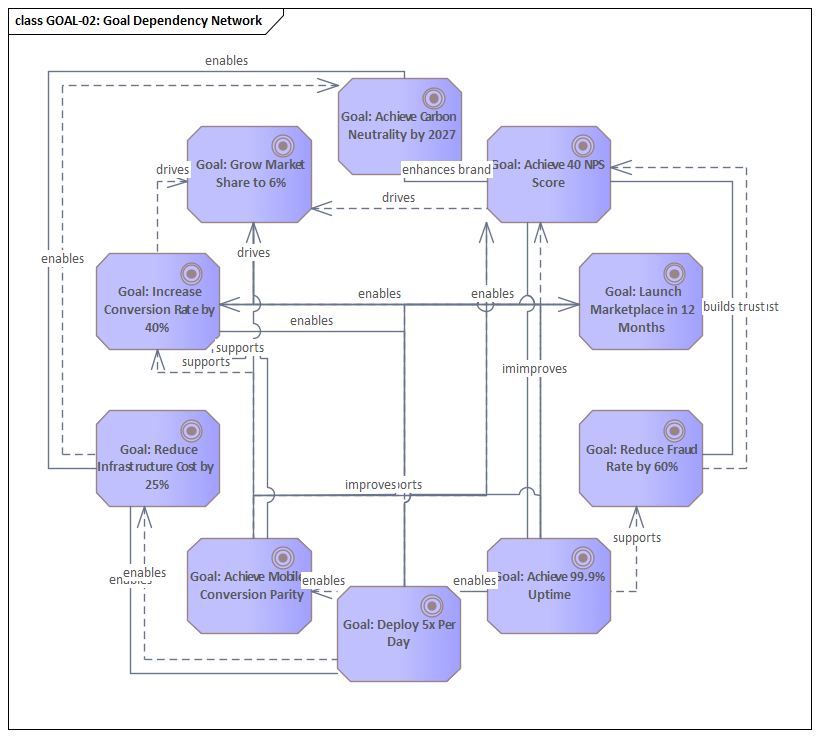
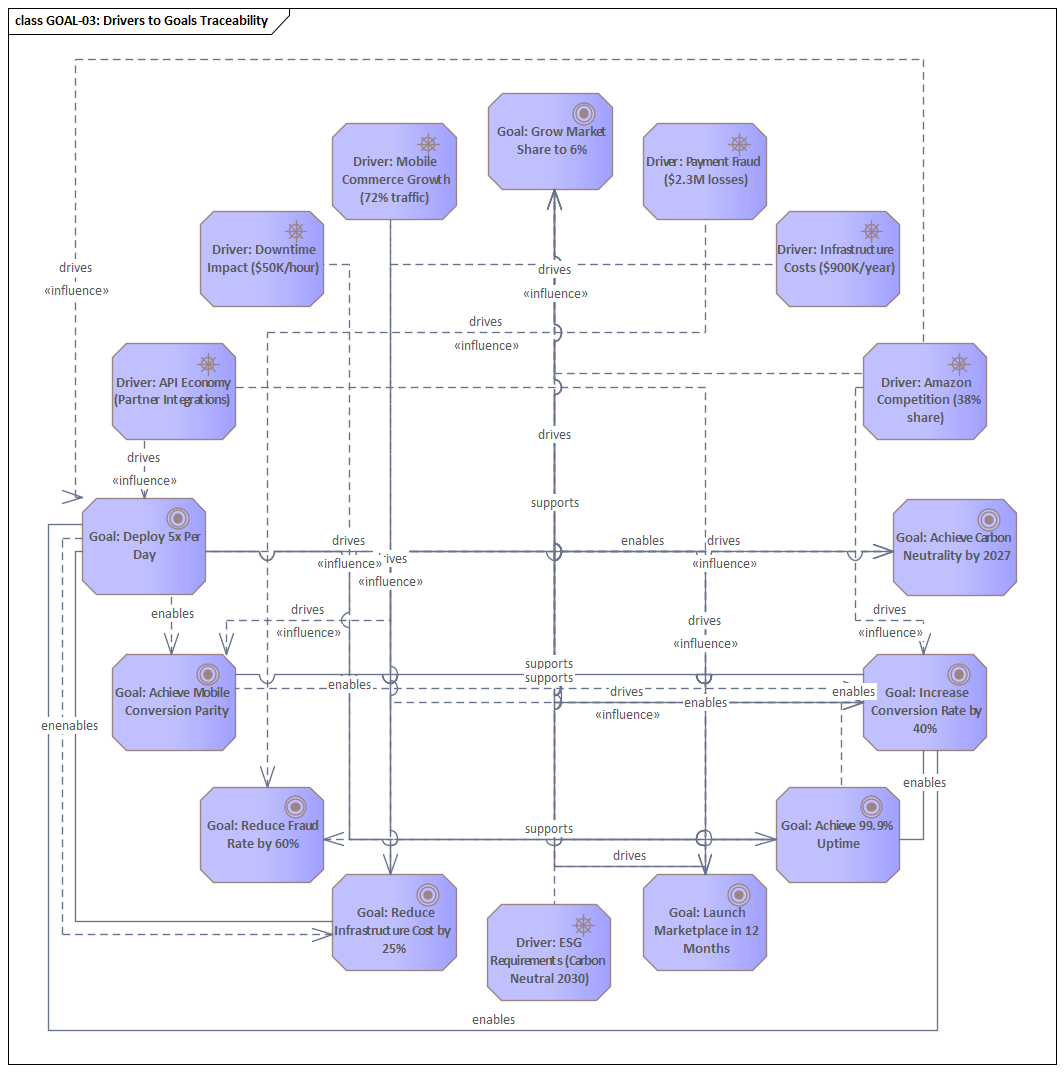
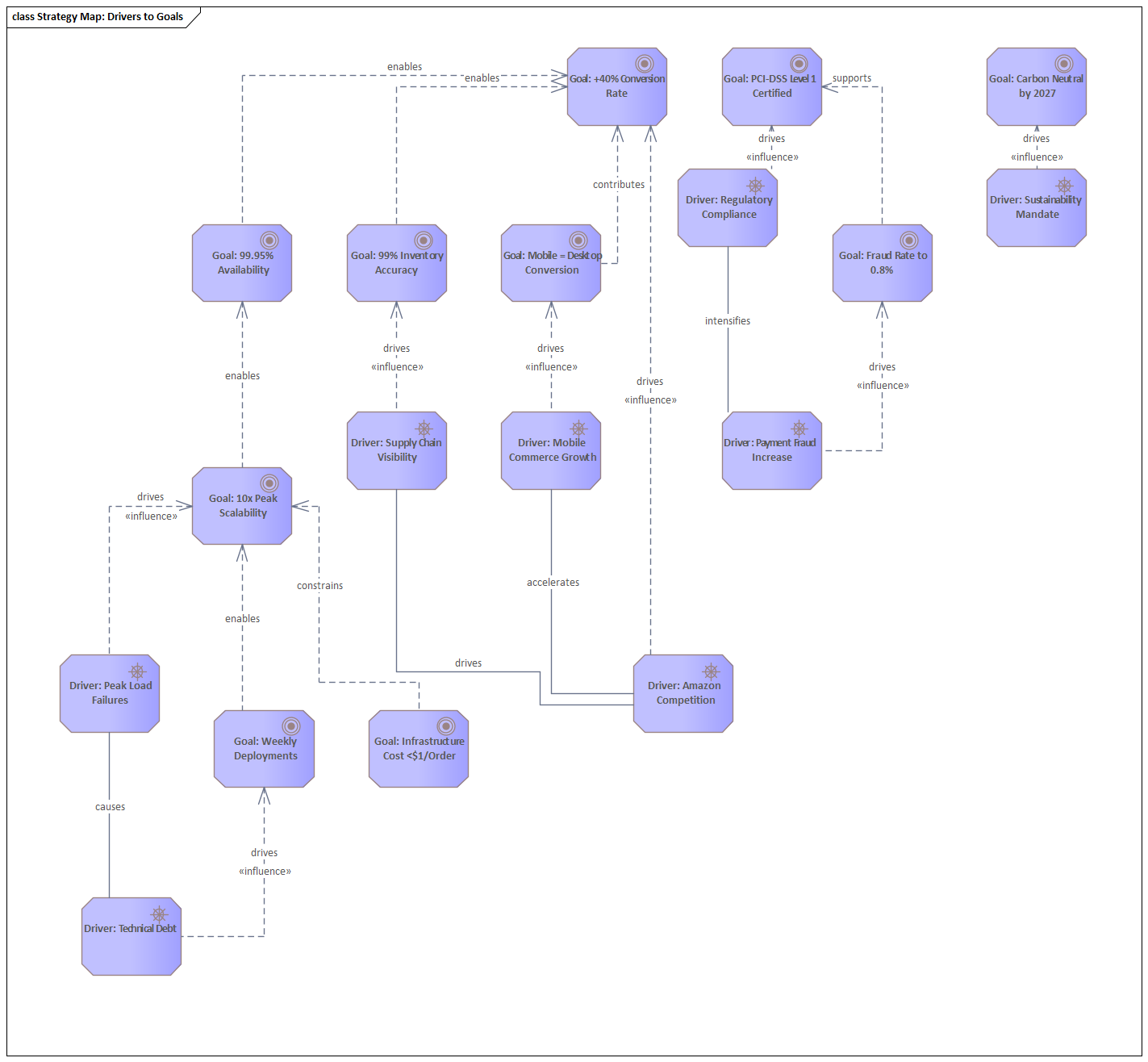
Eight business forces drive ten strategic goals. This chapter traces the motivation from external pressures down to specific, measurable outcomes the architecture must deliver.
2.1 Executive Strategy Map
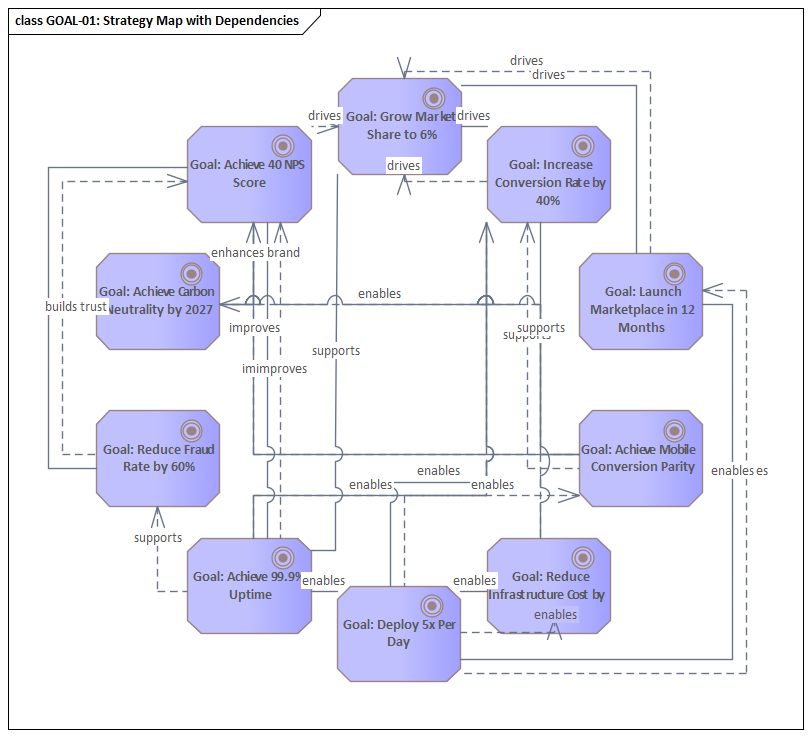
The strategy map below is the single most important view for executive stakeholders. It shows how business drivers cascade into strategic goals and how infrastructure choices support them. Every node is a commitment with a measurable target.
VIEW-01Strategy Map (Executive)+6%Market Share Target−25%Infrastructure Cost ($675K)+40%Conversion Rate (to 2.5%)NPS 40Industry-Leading Score99.9%Platform Uptime−60%Fraud Reduction (to 0.8%)5×/dayDeployment Frequency$50K/hrDowntime Cost (avoided)Key insight: Amazon competition (38% share) and mobile growth (72% of sessions) are the primary external pressures. The architecture must deliver mobile parity and a marketplace feature to compete, while simultaneously reducing infrastructure waste to fund the investment.
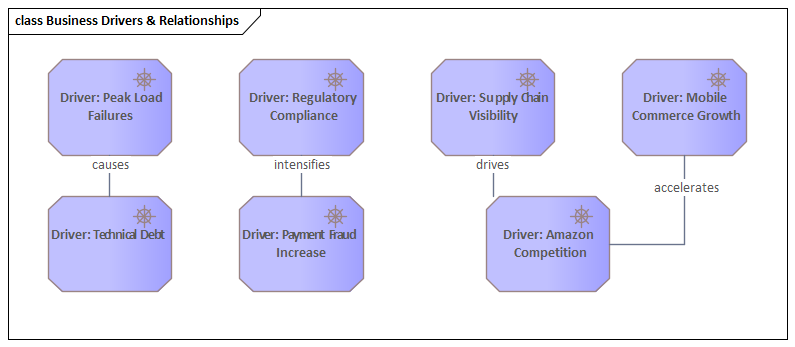
2.2 Business Drivers
Eight business forces shape every architectural decision. These are not abstract aspirations — they are the real conditions the business operates in and must respond to.
Business Drivers & Relationships
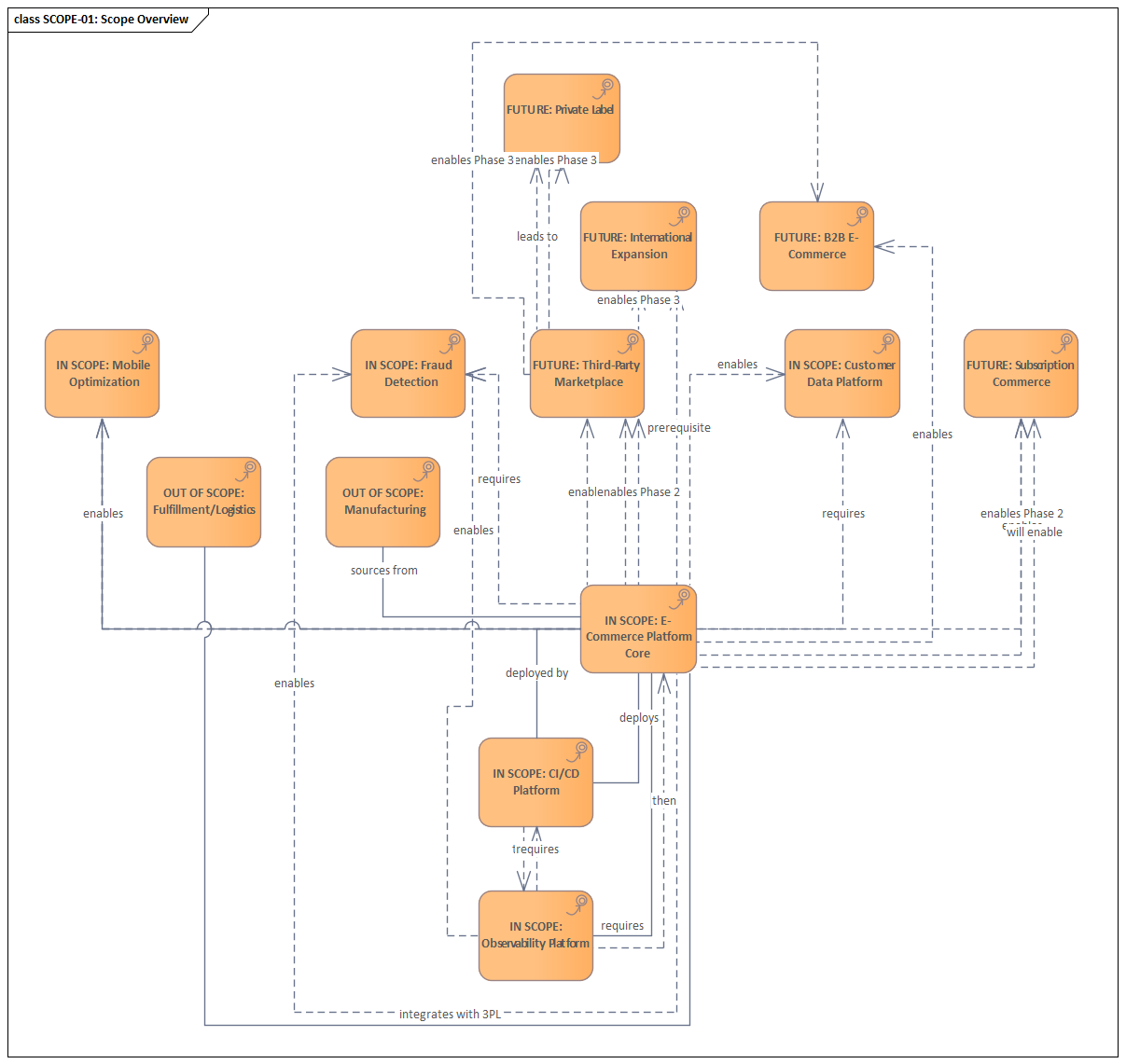
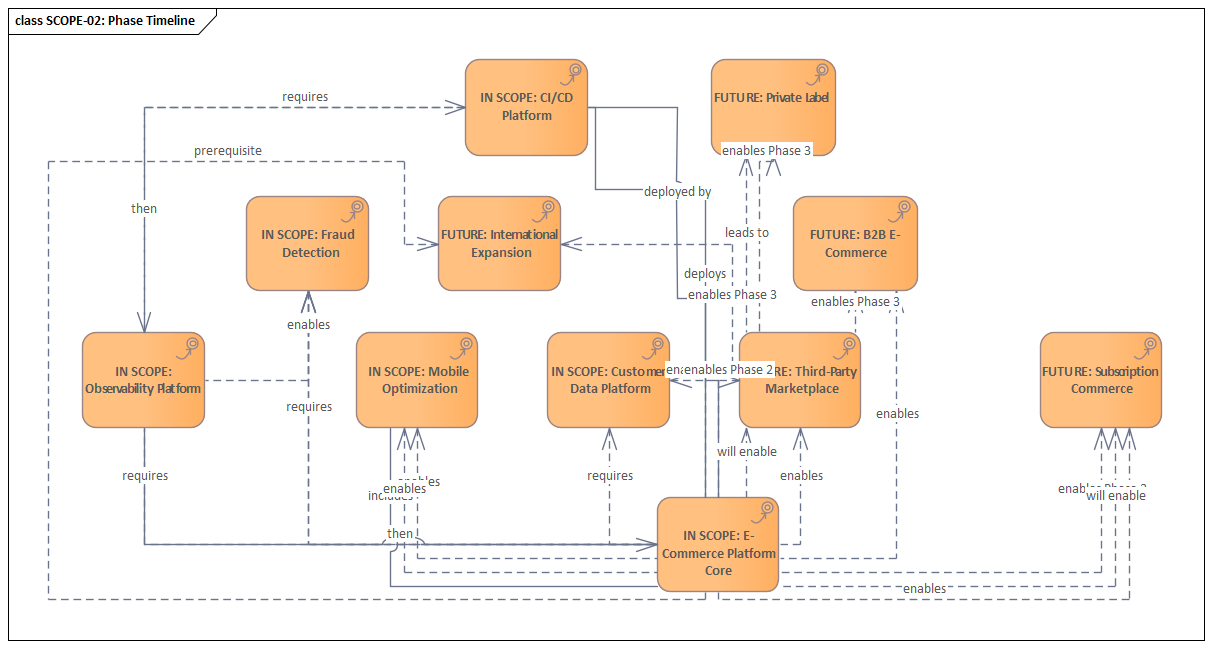
2.3 Scope & Phase Timeline
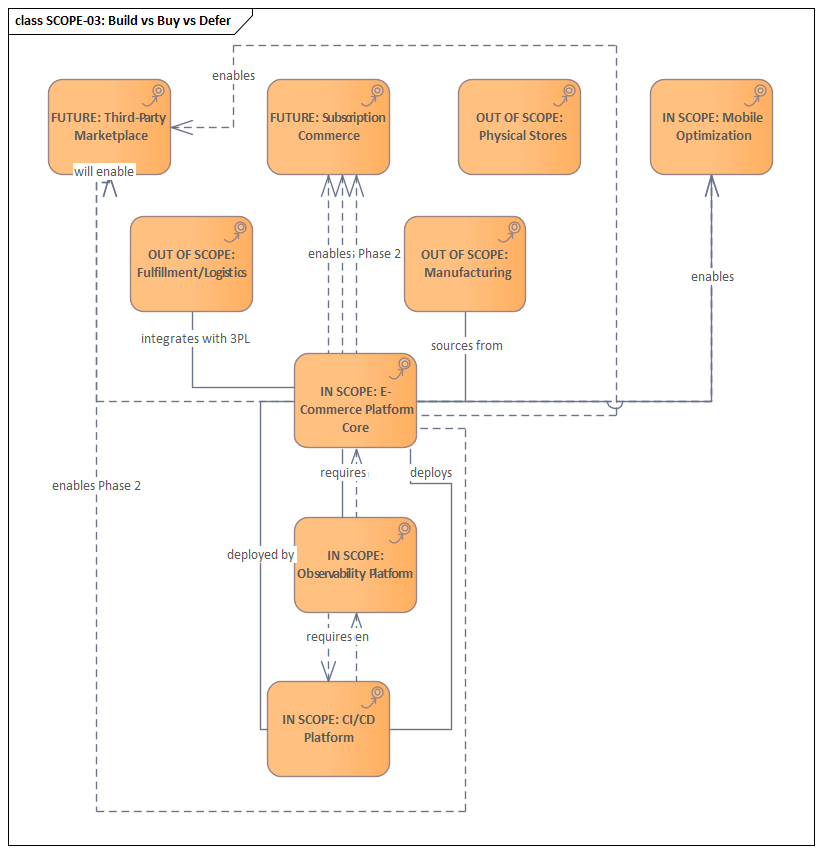
The initiative is phased to deliver value incrementally. The scope diagram separates what is being built, bought, or deferred. The phase timeline maps deliverables to quarters.
SCOPE-01Scope Overview02 Strategy Motivation 02 01 Drivers 8 Business Forces 02 02 Strategic Goals Goal 0102 Strategy Motivation 02 01 Drivers 8 Business Forces 02 02 Strategic Goals Goal 02 Goal02 Strategy Motivation 02 01 Drivers 8 Business Forces 02 02 Strategic Goals Goal 0302 Strategy Motivation 02 01 Drivers 8 Business Forces Business Drivers Relationships02 Strategy Motivation 02 02 Strategic Goals 10 Objectives Strategy Map Drivers To Goals02 Strategy Motivation 02 03 Scope Boundaries Scope 01 Scope Overview02 Strategy Motivation 02 03 Scope Boundaries Scope 02 Phase Timeline02 Strategy Motivation 02 03 Scope Boundaries Scope 03 Build Vs Buy Vs Defer04 Business Architecture 04 01 Capability Map 15 Real Capabilities L1 Capability Map With04 Business Architecture 04 03 Business Processes 8 Core Processes Core Business Process04 Business Architecture 04 04 Business Roles 12 Roles Raci Matrix Roles To Capabilities
Chapter III: Requirements
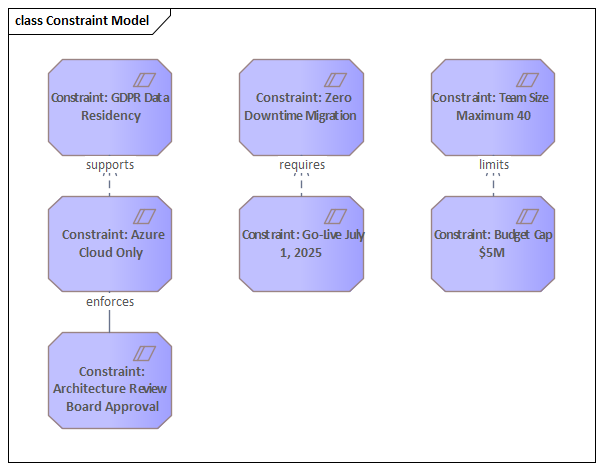
Thirty functional requirements, fifteen non-functional requirements, and eight hard constraints define what the system must do, how well it must do it, and what it must never violate.
3.1 Functional Requirements Hierarchy
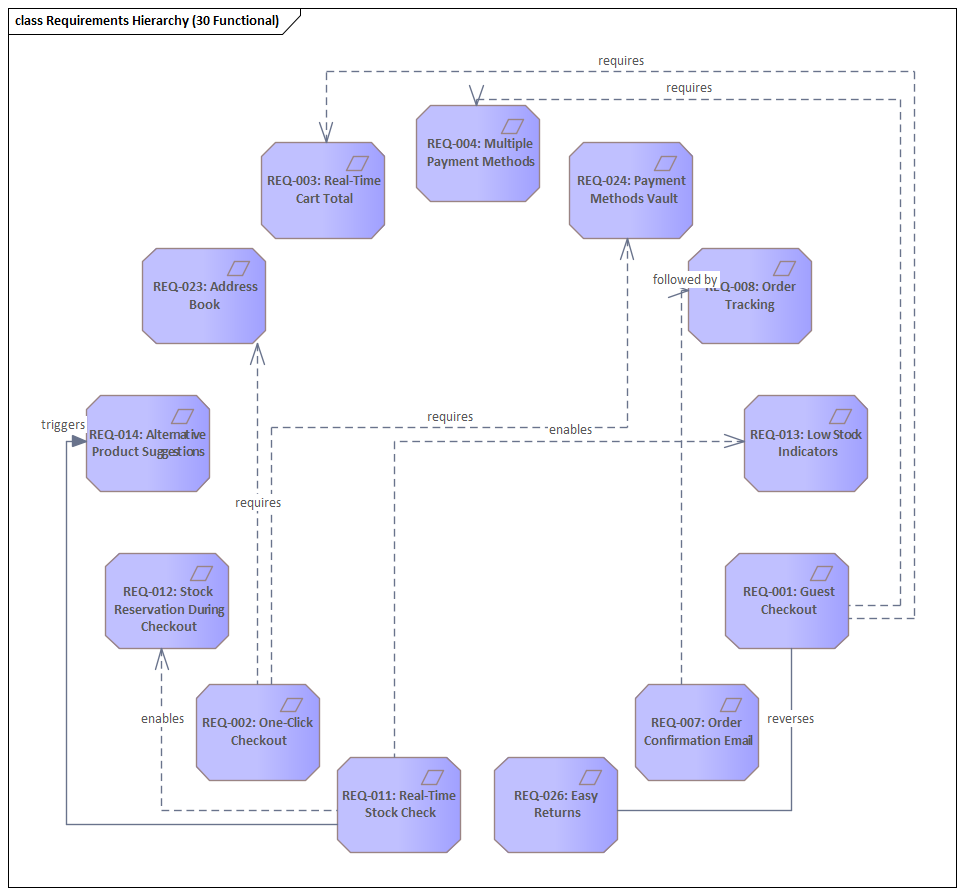
The requirements are not isolated statements — they form a dependency graph. The diagram shows how checkout-related requirements cascade into inventory, payment, and notification requirements.
Requirements Hierarchy (30 Functional)
Key requirements from the model include:
ID
Requirement
Category
REQ-001
Guest Checkout — purchase without registration
Checkout
REQ-002
One-Click Checkout for returning customers
Checkout
REQ-003
Real-Time Cart Total with dynamic pricing
Checkout
REQ-004
Multiple Payment Methods (card, wallet, BNPL)
Payment
REQ-007
Order Confirmation Email within 30 seconds
Orders
REQ-008
Real-Time Order Tracking with carrier integration
Orders
REQ-011
Real-Time Stock Check during browse and checkout
Inventory
REQ-012
Stock Reservation During Checkout (10-minute hold)
Inventory
REQ-013
Low Stock Indicators on product pages
Inventory
REQ-014
Alternative Product Suggestions when out-of-stock
Discovery
REQ-023
Address Book with multiple saved addresses
Profile
REQ-024
Payment Methods Vault (PCI-DSS compliant)
Payment
REQ-026
Easy Returns — self-service return initiation
Returns
3.2 Non-Functional Requirements
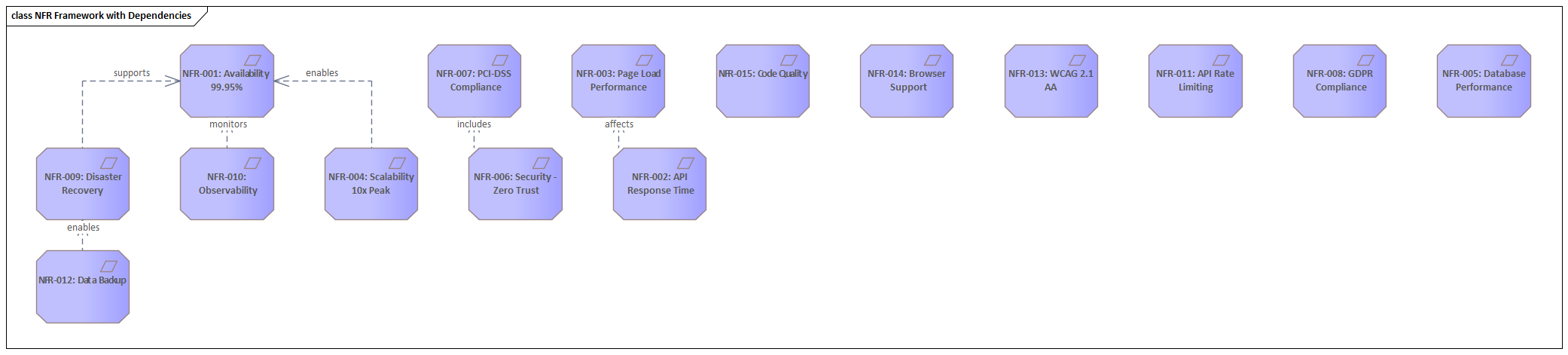
The NFR framework establishes quality thresholds across performance, security, reliability, and maintainability. These are enforced in CI/CD gates — a service that violates them cannot be promoted to production.
NFR Framework with Dependencies
Critical NFRs include: p99 API latency <200ms, checkout page load <3s on 3G, 99.9% monthly uptime SLA, PCI-DSS Level 1 compliance, WCAG 2.1 AA accessibility, and MTTR <15 minutes for Sev-1 incidents.
03 Requirements 03 01 Business Requirements 30 Real 04 01 Capability Map 15 Real Capa L103 Requirements 03 01 Business Requirements 30 Real 04 03 Business Processes 8 Core P03 Requirements 03 01 Business Requirements 30 Real 04 04 Business Roles 12 Roles Raci03 Requirements 03 01 Business Requirements 30 Real Requirements Hierarchy 30 Functional03 Requirements 03 02 Non Functional Requirements 15 Real Nfrs Nfr Framework With03 Requirements 03 03 Constraints 8 Hard Constraints Constraint Model
Chapter IV: Business Architecture
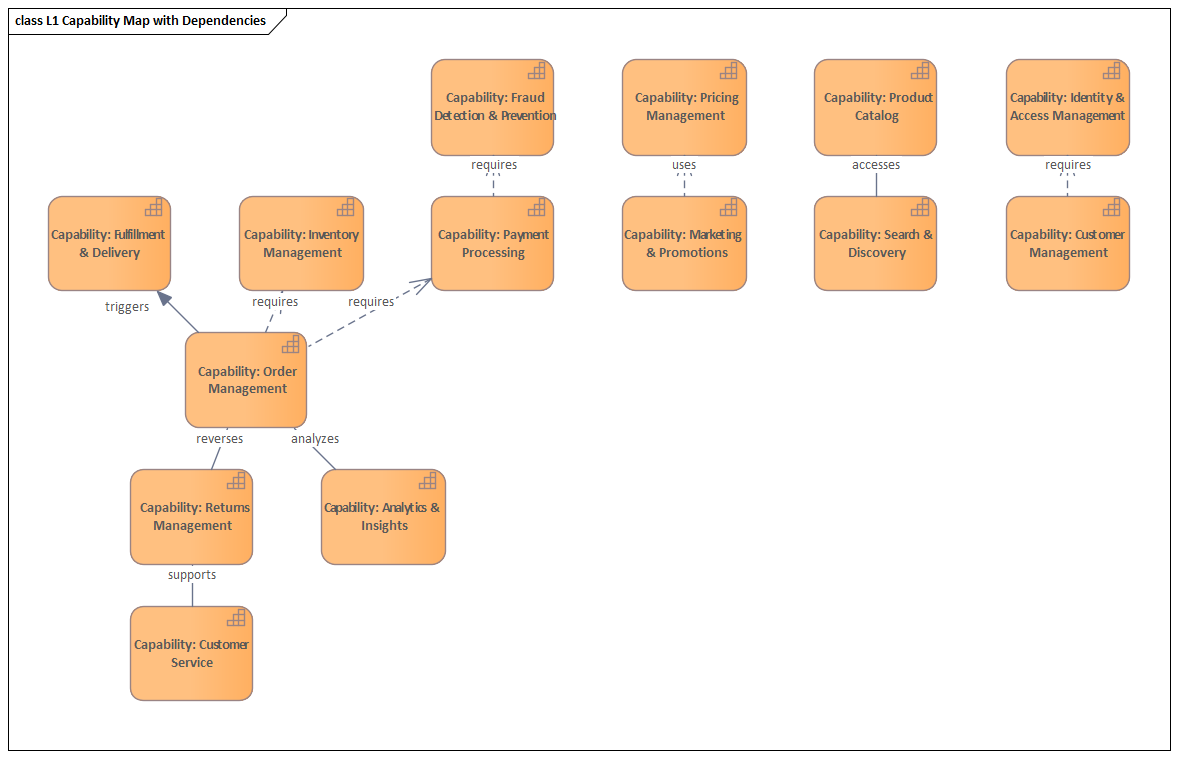
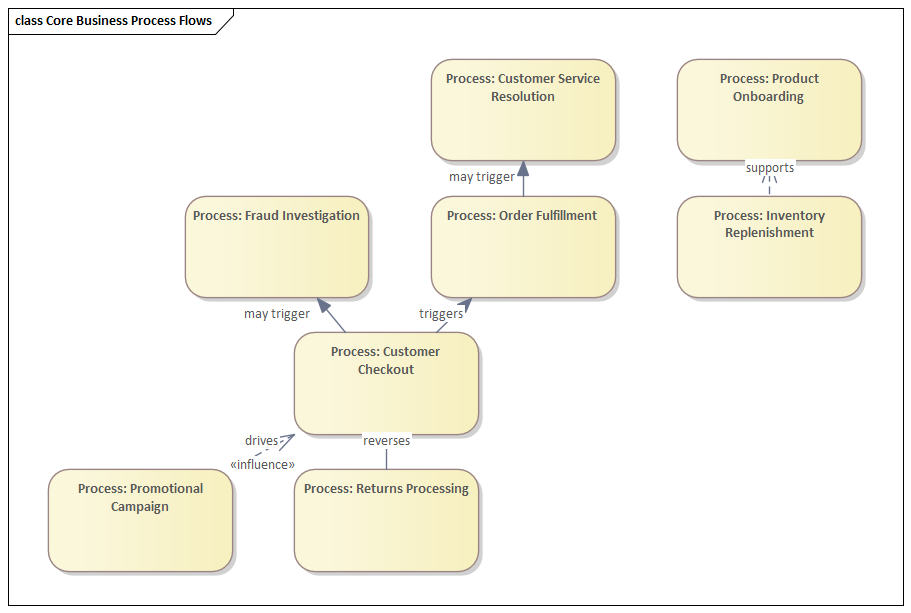
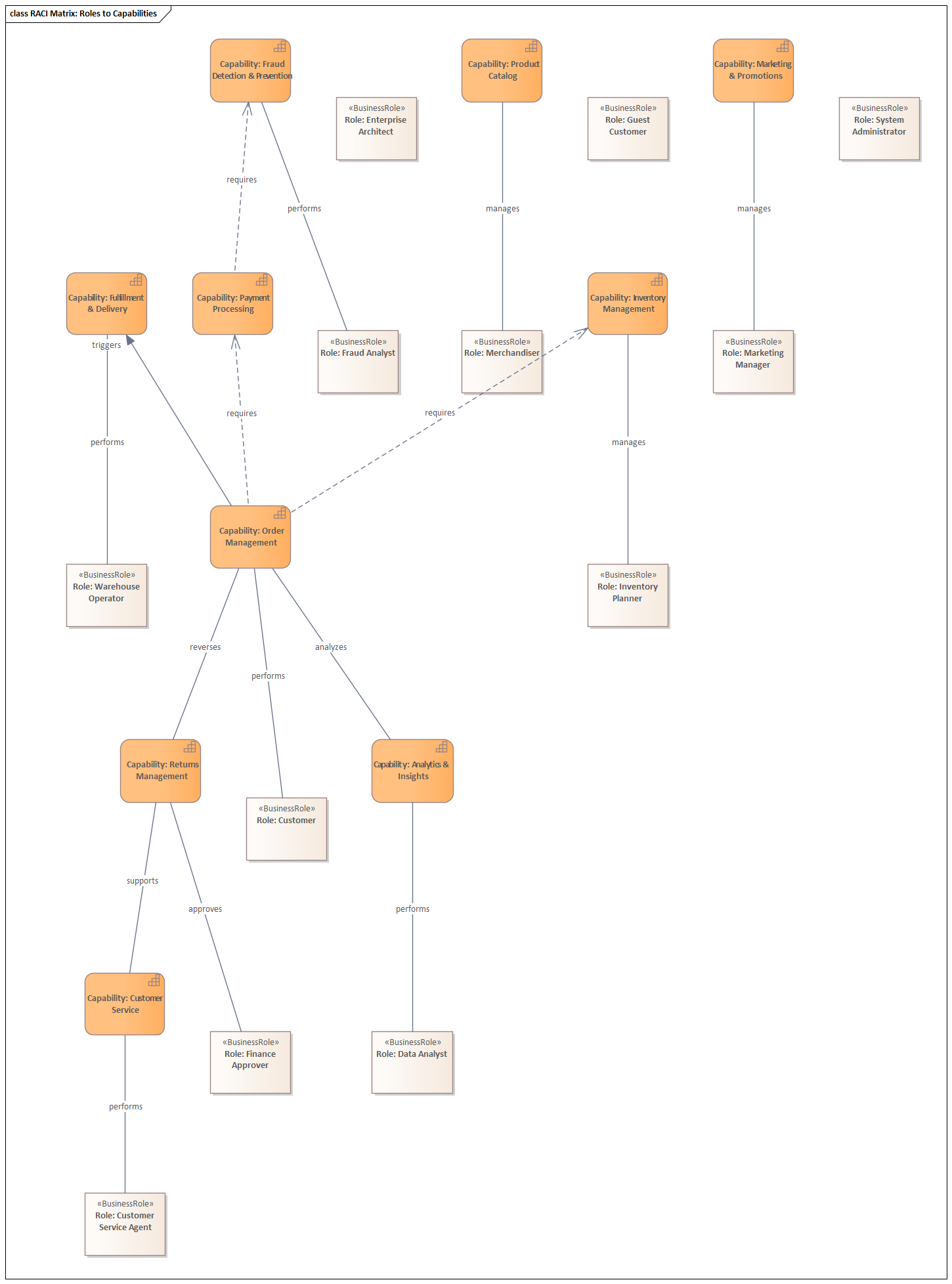
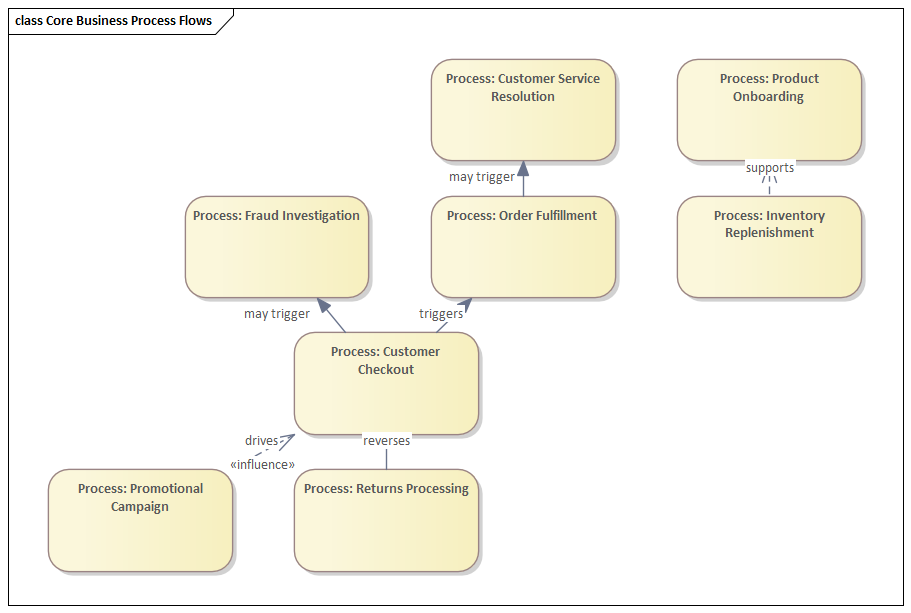
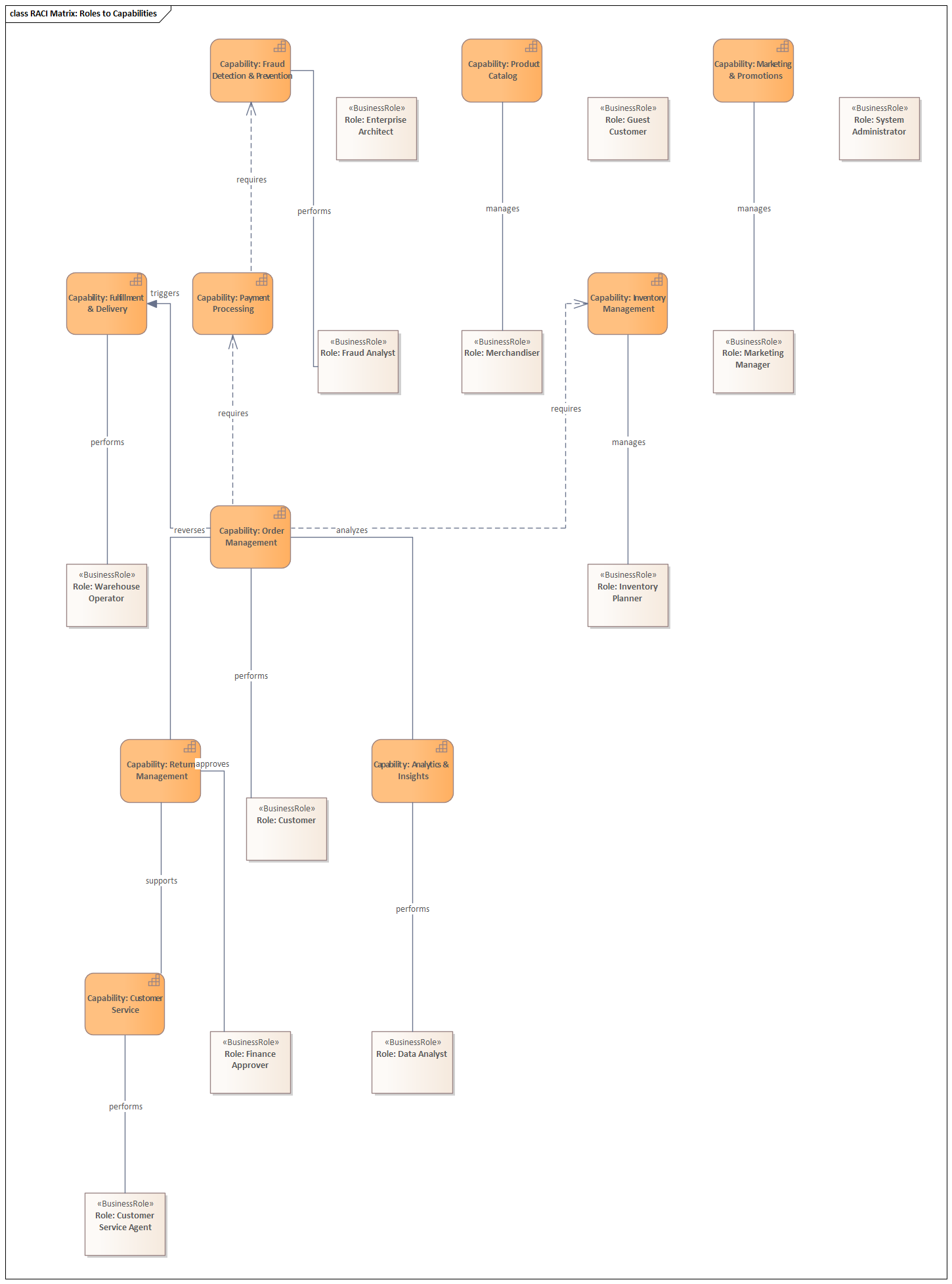
Fifteen business capabilities, eight core processes, and twelve business roles define what the organisation does — independent of the technology that supports it.
4.1 Capability Map
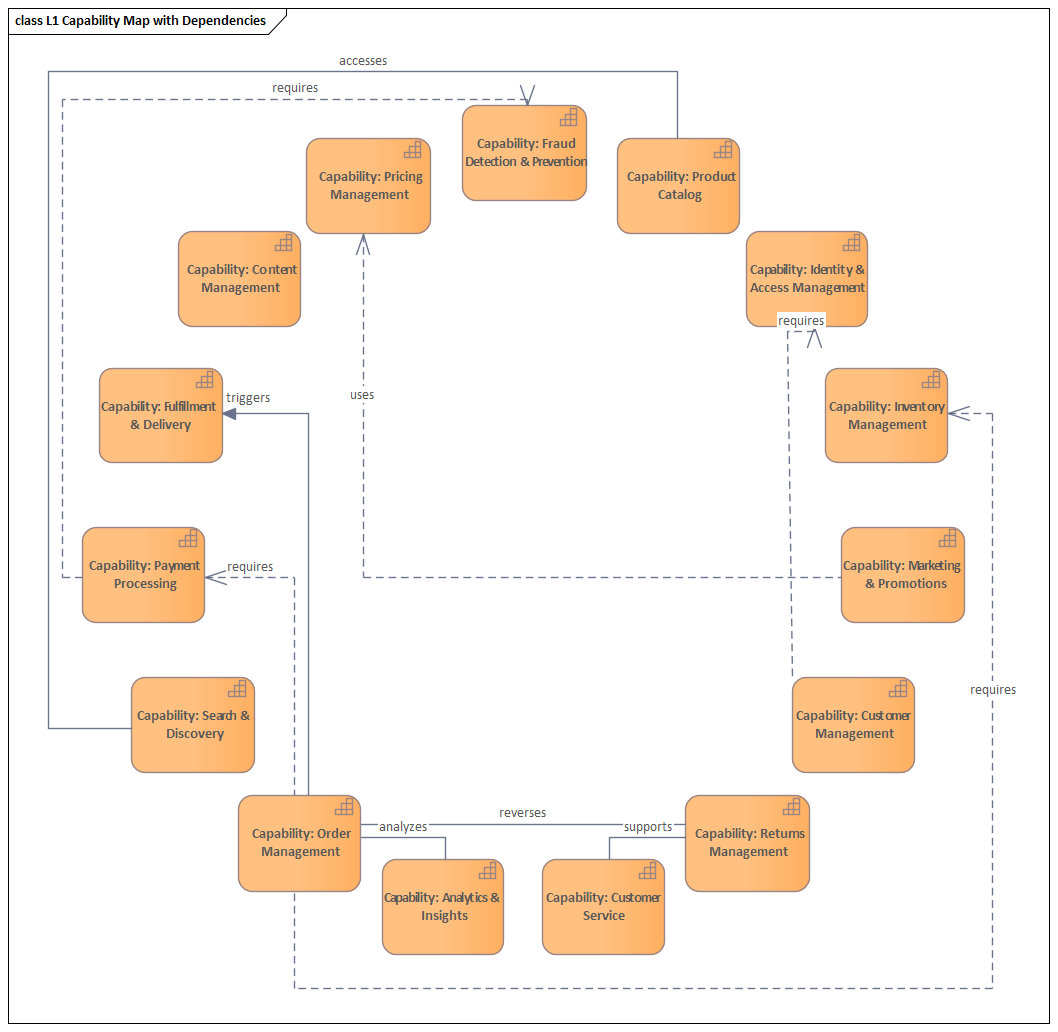
The L1 Capability Map defines what the business does at the highest level. Capabilities are business outcomes, not IT systems. Order Management sits at the heart, triggering Fulfillment and requiring both Inventory Management and Payment Processing to function.
L1 Capability Map with Dependencies
Core Transactional Capabilities
Order Management (central hub)
Payment Processing
Inventory Management
Fulfillment & Delivery
Returns Management
Fraud Detection & Prevention
Growth & Insight Capabilities
Product Catalog
Search & Discovery
Marketing & Promotions
Pricing Management
Analytics & Insights
Customer Management
Identity & Access Management
Loyalty (via Returns)
Customer Service
4.2 Core Business Processes
Core Business Process Flows
4.3 Roles & RACI
RACI Matrix — Roles to Capabilities
Chapter V: Application Architecture
Twenty-five microservices, a GraphQL gateway, a PWA storefront, and a native mobile app form the application layer. This chapter documents the landscape, the integration topology, and the component-level technology choices.
5.1 Microservices Landscape
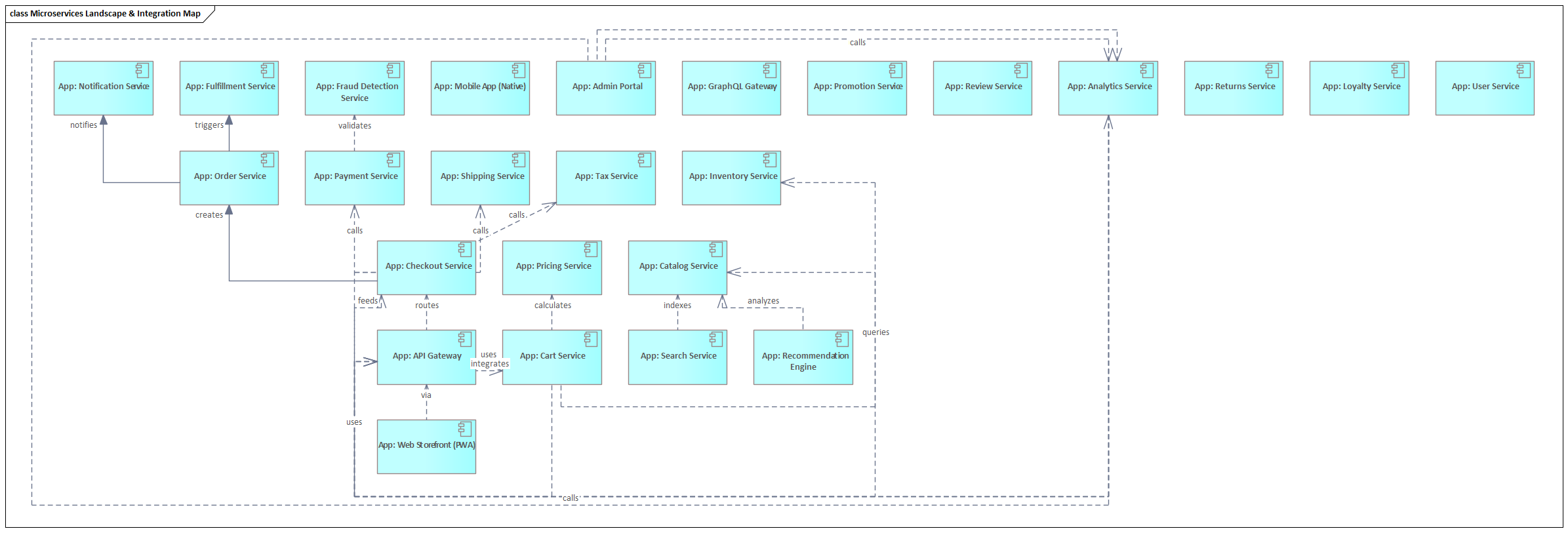
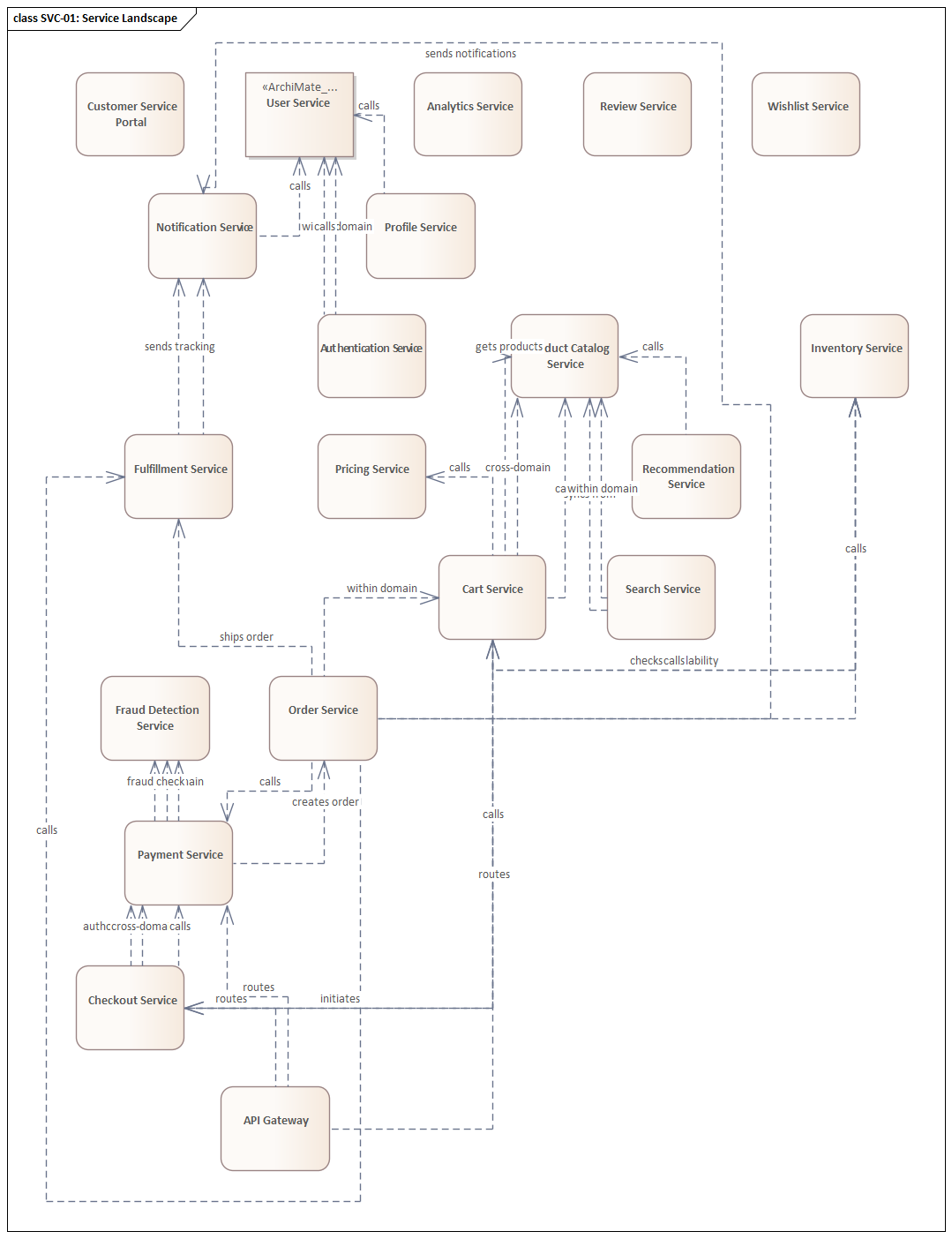
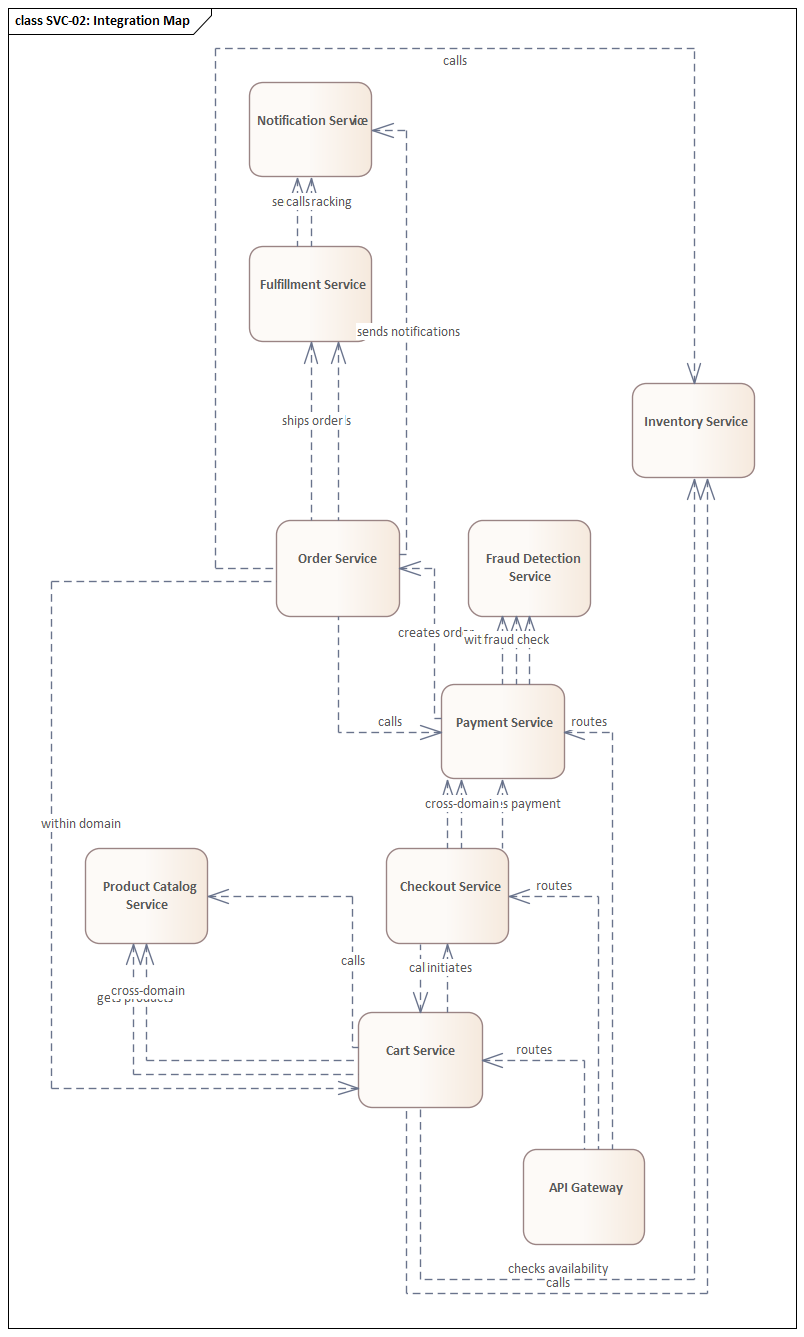
The platform is decomposed into 25 independently deployable microservices, each aligned to a bounded domain context. The Web Storefront (PWA) routes through the API Gateway, which fans out to domain services. The GraphQL Gateway provides a unified query surface for complex data fetching.
Microservices Landscape & Integration Map
Service
Domain
Role
Web Storefront (PWA)
Frontend
Next.js progressive web app — primary customer interface
Mobile App (Native)
Frontend
iOS/Android native application
API Gateway
Platform
Kong — single ingress, auth, rate limiting, routing
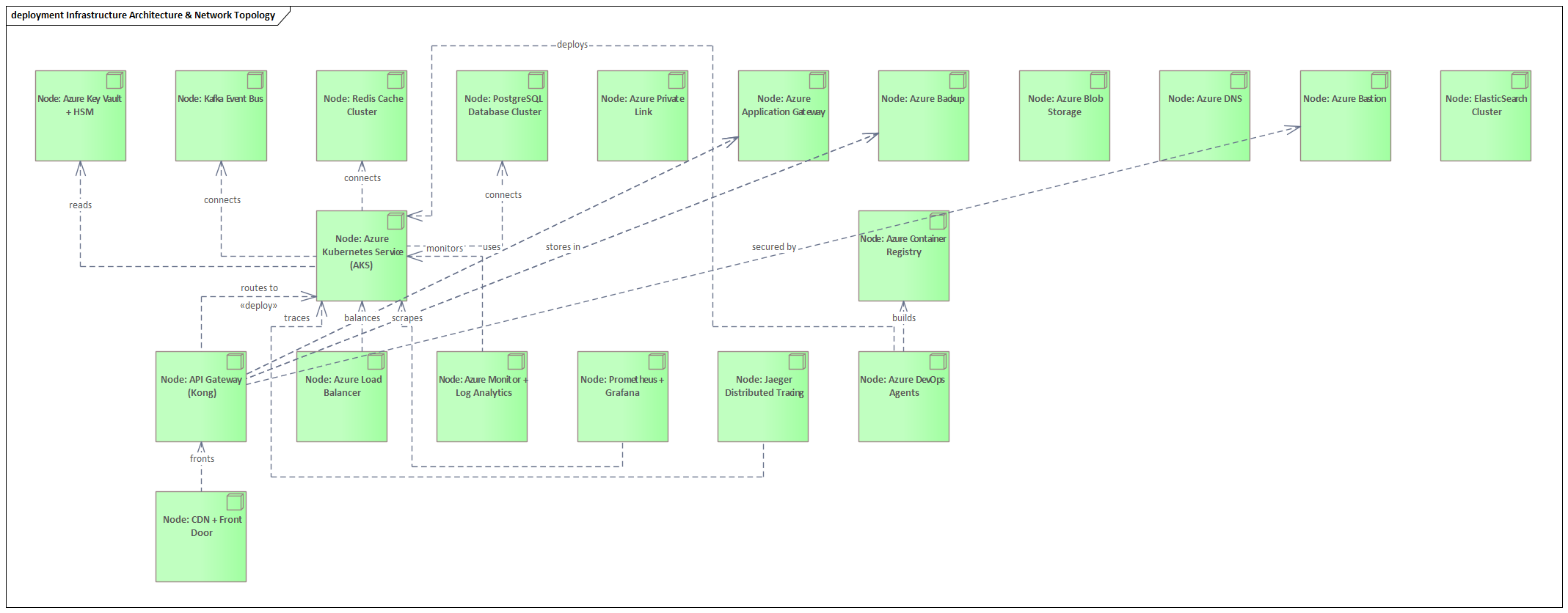
Twenty infrastructure nodes on Microsoft Azure form the deployment substrate. This chapter documents the network topology, the security boundaries, and the observability stack.
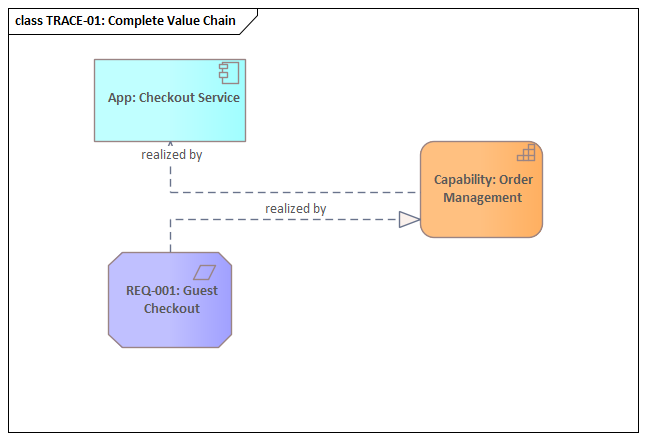
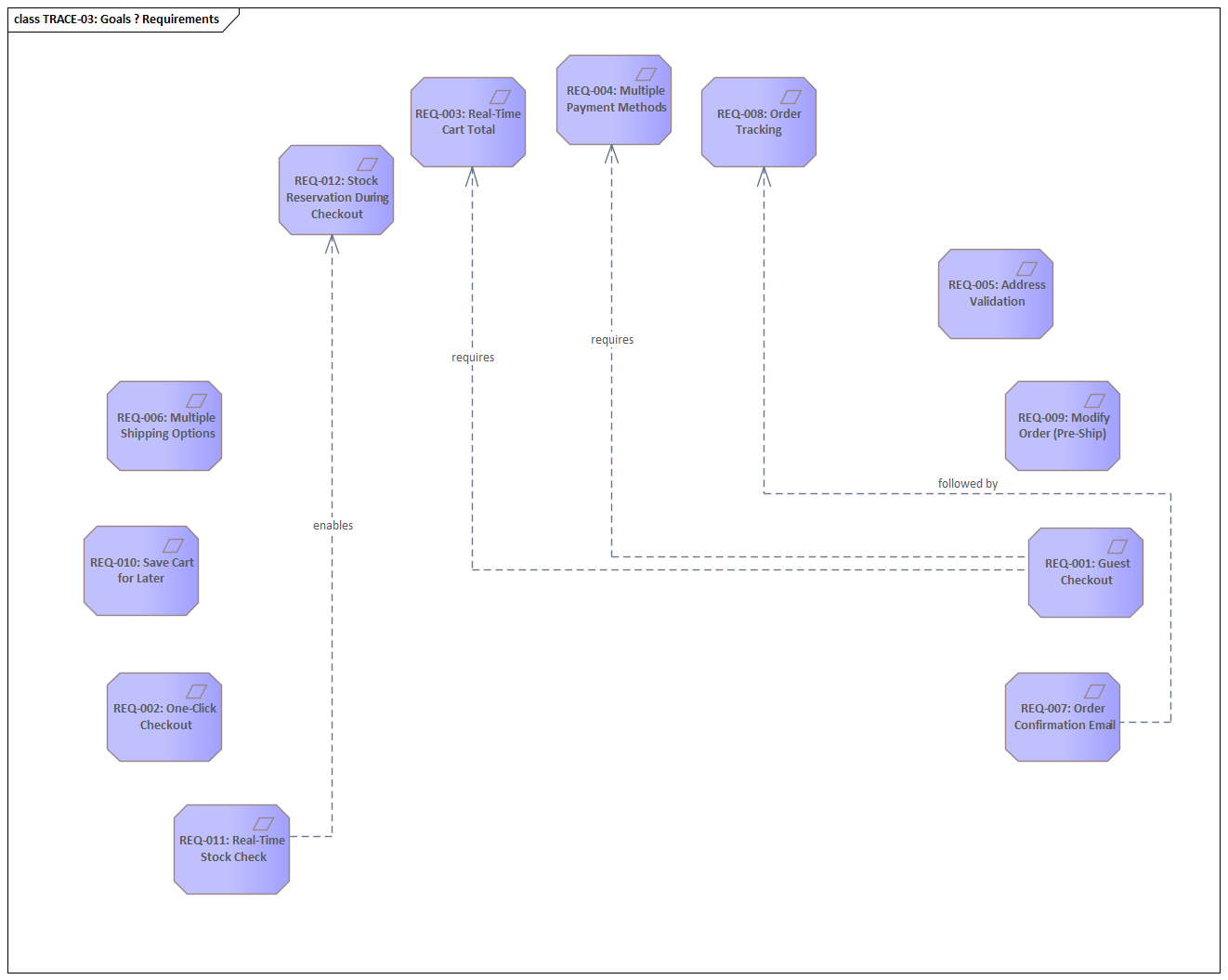
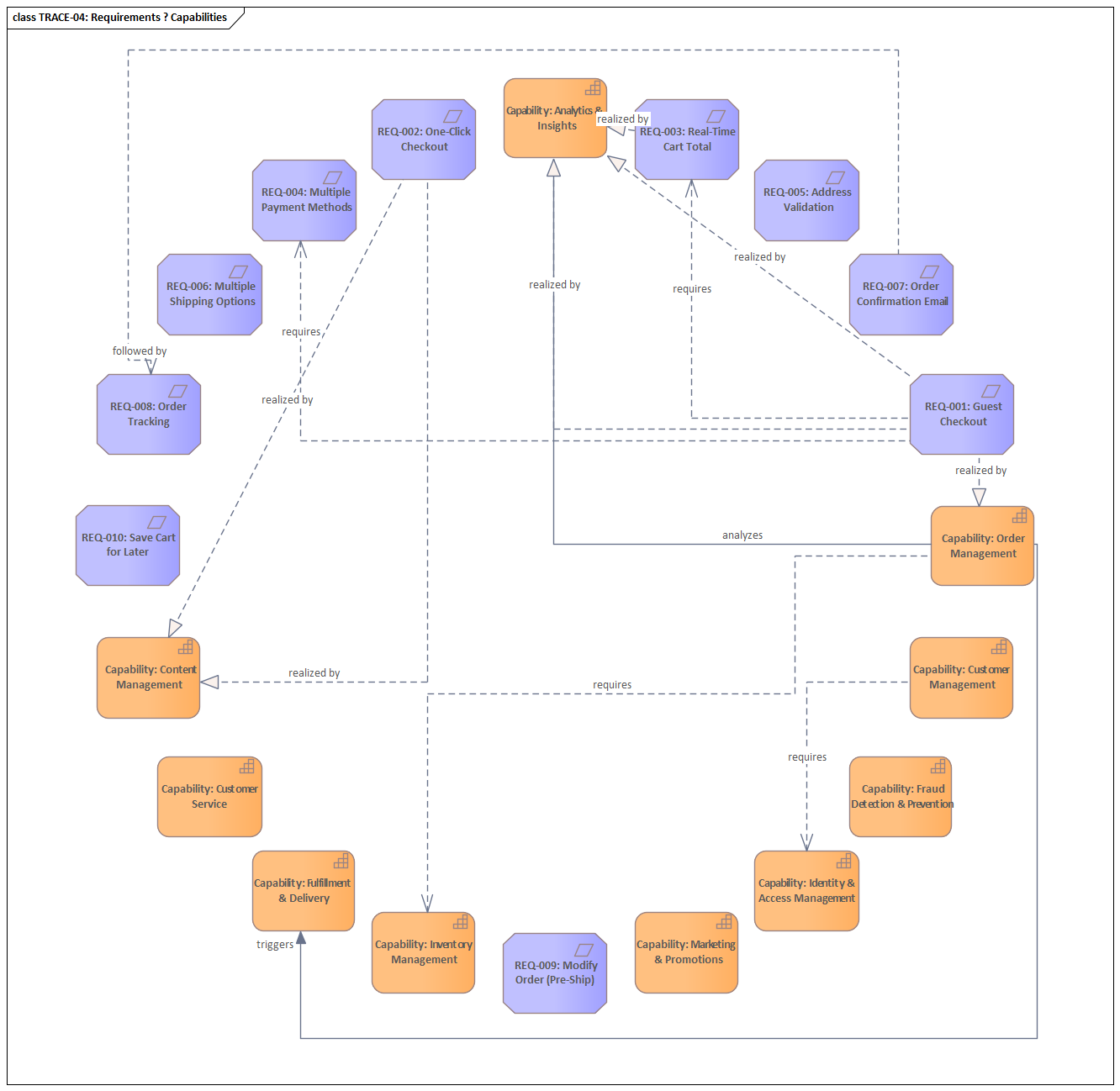
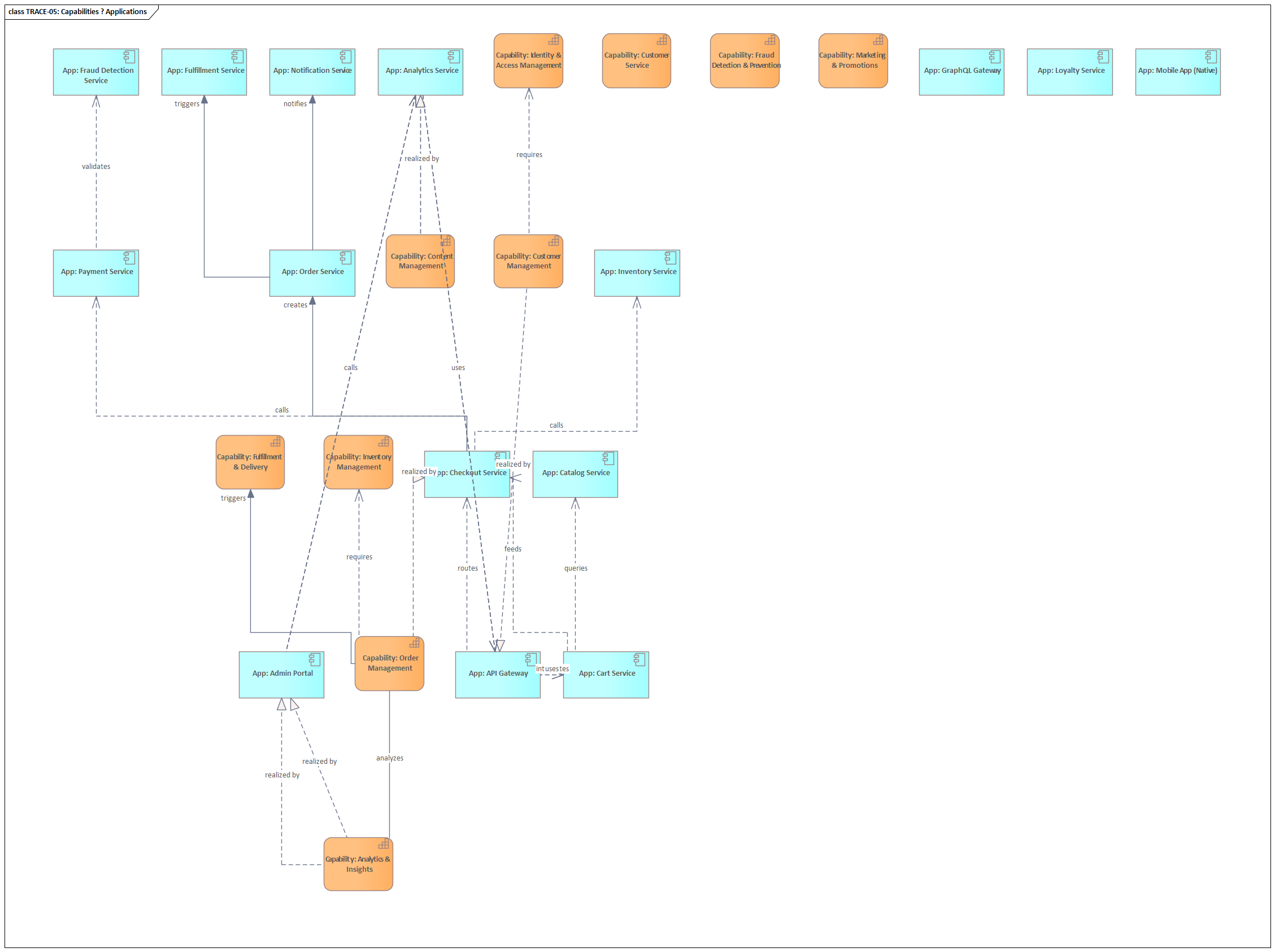
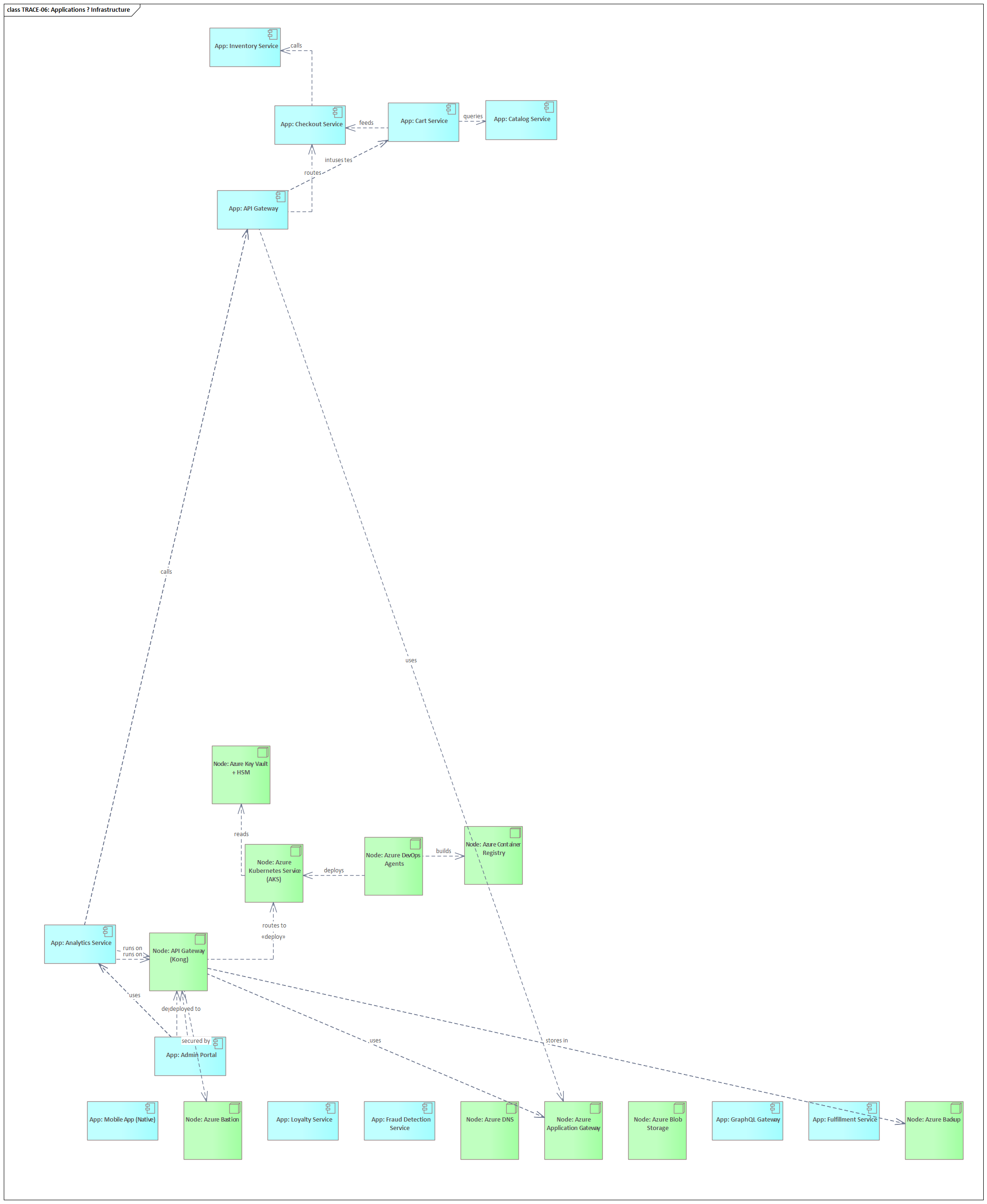
The complete value chain connects every business driver to the infrastructure node that ultimately delivers it. Six traceability diagrams form a continuous thread from strategy to silicon.
7.1 Complete Value Chain
The value chain is the most powerful governance tool in the architecture. It proves that every infrastructure investment is traceable to a strategic goal, and that every strategic goal has at least one concrete technical delivery.
Curated views for three audiences: executives who need strategic clarity, architects who need design detail, and operations teams who need runtime topology.
8.1 Executive Dashboard
VIEW-02Investment Portfolio (Exec)
ARCH-04Requirements → Capabilities
VIEW-07Technology Stack (Arch)
End of Document
Closing Remarks
This architecture represents a modern, cloud-native, event-driven ECommerce platform designed to compete at scale. Its ten architecture principles, fifteen ADRs, and complete traceability chain from business driver to infrastructure node form a cohesive and auditable design that can guide teams through multi-year delivery. enterprise cloud architecture patterns
The model was captured in Sparx Enterprise Architect and follows ArchiMate 3.1 notation throughout. All diagrams and content contained in this document are derived directly from that model. enterprise architecture guide
Next steps: Use the ADR list as a starting checklist for architecture review board sign-off. Use the traceability diagrams (Chapter VII) to validate that proposed changes to any layer ripple correctly through the chain. Use the Executive Dashboard views (Chapter VIII) for programme governance reporting.