Introduction
Introduction
Pharmacovigilance (PV) is the backbone of patient safety in the life sciences industry. With the rise of real-world data (RWD), AI-assisted signal detection, and globally harmonized regulatory requirements, PV is undergoing a digital transformation. Pharmacovigilance 4.0 is the next evolution—leveraging enterprise architecture (EA) to integrate clinical, post-marketing, and real-time safety monitoring into a traceable, intelligent system.
This article explores how TOGAF and ArchiMate can be used to model and govern modern pharmacovigilance architectures, enabling signal detection, risk mitigation, and compliance reporting across global regulatory landscapes.
1. Defining Pharmacovigilance 4.0
Pharmacovigilance 4.0 refers to the application of digital technologies and architectural governance to support advanced PV operations. This includes:
- Automated signal detection using AI/ML algorithms
- Integration of real-world evidence (RWE) and EHR data
- Global ICSR (Individual Case Safety Report) harmonization via E2B(R3)
- End-to-end traceability of safety signals and actions
2. Using TOGAF to Structure PV Architecture Development
TOGAF’s Architecture Development Method (ADM) provides a proven approach for PV transformation:
- Preliminary Phase: Define safety governance, architecture principles (GVP, ICH, FDA)
- Phase A: Develop an Architecture Vision for safety automation and integration
- Phase B: Model business capabilities such as "Signal Detection" and "Case Management"
- Phase C: Align application services (e.g., safety databases, literature monitors)
- Phase D: Define enabling technologies (e.g., NLP engines, RPA bots)
3. Key Capabilities in a Modern PV Operating Model
- Safety Data Ingestion: Structured and unstructured data sources, E2B(R3), RWD
- Signal Detection: Algorithms, statistical modeling, disproportionality analysis
- Case Processing: Triage, coding, causality assessment, narrative generation
- Regulatory Reporting: ICSR submissions, periodic reports (PBRER, DSUR)
- Risk Management: Signal validation, risk-benefit assessment, risk mitigation
4. Modeling Signal Detection Architecture in ArchiMate
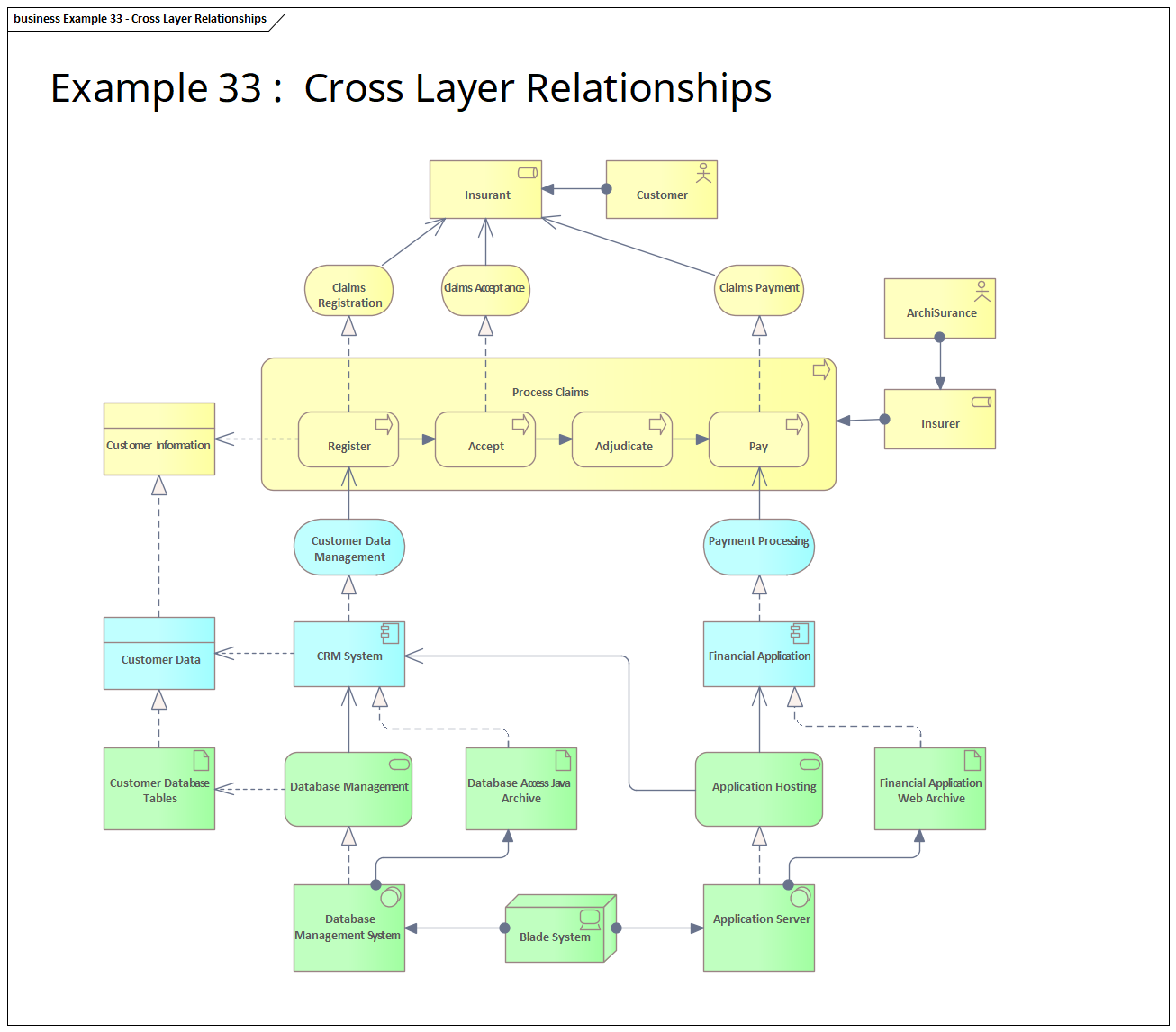
In ArchiMate, you can visualize the PV architecture across layers:
- Business Layer: “Pharmacovigilance Officer,” “Signal Detection Process”
- Application Layer: “Signal Analysis Platform,” “Safety Database,” “Literature Monitor”
- Technology Layer: “AWS NLP Service,” “Analytics Engine,” “Secure File Transfer Protocol”
Relationships between these layers provide insight into data lineage, responsibilities, and technical dependencies.
5. Aligning with Regulatory Requirements
Architectural models must reflect regulatory obligations:
- Include elements from GVP Module IX (Signal Management)
- Tag ArchiMate components with MedDRA versions, ICH terms, or WHO-DD references
- Create traceability views from data sources to risk mitigation actions
6. Enabling Interoperability and Compliance
Global pharmacovigilance requires integration across jurisdictions. EA helps by:
- Standardizing interface definitions (e.g., HL7, E2B)
- Modeling legal entity obligations per region
- Documenting integration with EudraVigilance, FAERS, VigiBase
7. Supporting Signal Lifecycle Governance
Each signal undergoes stages: detection, validation, analysis, prioritization, and decision-making. Use EA to model:
- State machines and workflows in Sparx EA
- Ownership roles and review checkpoints
- Dashboards (via Prolaborate) to monitor lifecycle KPIs
8. Case Study: PV Digital Transformation in a Top-10 Pharma
A global pharmaceutical company used TOGAF and ArchiMate to redesign its PV landscape. It consolidated three safety databases into a single global platform, integrated signal detection with RWD sources, and modeled reporting flows across 72 countries. As a result:
- Signal detection lag reduced by 40%
- Audit preparation time cut from 10 days to 3
- Architecture repository supported ISO IDMP, MedDRA, and ICH compliance
Conclusion
Pharmacovigilance 4.0 requires more than tools—it demands architecture. With TOGAF and ArchiMate, PV teams can model their processes, align systems, integrate new technologies, and respond to global regulatory demands. EA turns safety into a strategic advantage.
Pharmacovigilance, Signal Detection, Safety Systems, TOGAF, ArchiMate, Enterprise Architecture, GVP, E2B(R3), ICH Compliance, Real-World Data, Safety Case Management, Risk Management Plan, RWE, Medical Coding, MedDRA, ISO IDMP, FAERS, EudraVigilance, NLP in Pharma, PV 4.0, Sparx EA, Prolaborate, Regulatory Architecture
If you’d like hands-on training tailored to your team (Sparx Enterprise Architect, ArchiMate, TOGAF, BPMN, SysML, or the Archi tool), you can reach us via our contact page.